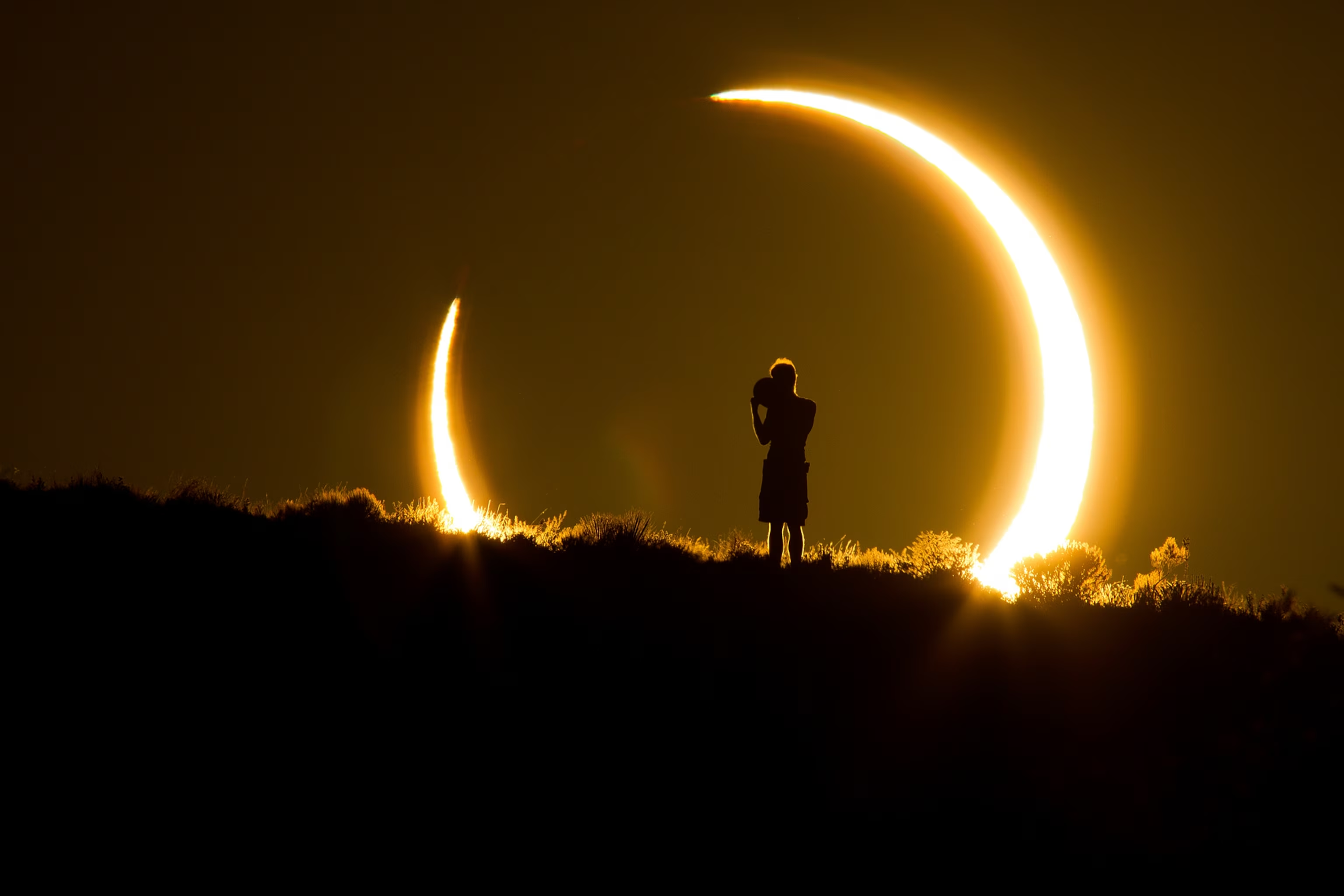
Cairo, Egypt – In the eyes of ancient peoples, a solar eclipse was not merely an ordinary astronomical alignment, but a monumental event that inspired awe, invoking a flood of myths that sought to “translate” the temporary disappearance of the sun from the sky. In the absence of scientific explanation, civilizations resorted to the language of imagination, weaving from their terror and wonder stories about celestial creatures devouring the light or gods expressing their wrath.
The Celestial Dragon: China’s Cries to Restore the Sun
In East Asian civilizations, specifically in ancient China, the myth of the “Celestial Dragon” that stalks the sun to swallow it prevailed. The eclipse was a moment of imminent danger; thus, people did not stand idly by. They created loud noise by beating drums and striking metal pots, attempting to scare the dragon and force it to spit out the sun and return it to its path.
Maya and Aztec Civilizations: The Eclipse as a Cosmic Disturbance
In Central America, the eclipse was viewed as a sign of an imbalance in the universe or a bitter struggle between the forces of good and evil. The Maya and Aztec peoples believed this event reflected divine wrath, prompting them to perform precise religious rituals and offer sacrifices to appease the gods, restore the lost cosmic balance, and ensure the continuation of life.
Between Greek Philosophy and Middle Eastern Myths
Ancient Greeks: Their interpretation was dualistic; while the public saw the eclipse as divine wrath or an omen of evil, especially during wars, their philosophers began laying the first building blocks of rational thought, attempting to transcend superstition toward finding natural explanations.
Middle East: Beliefs prevailed regarding conflicts between invisible celestial forces, where evil entities attempted to rob the world of the sun’s light, which would disappear temporarily before returning victorious at the end of the cosmic “battle.”
Fear of the Sun’s “Temporary Death”
In agricultural societies whose existence was intimately linked to sunlight, the eclipse sparked existential anxiety. It was viewed as a kind of “temporary death” or the sun’s departure to another world, generating a deep sense of human vulnerability before the power of nature.
From Imagination to Science: The Lasting Legacy
With the advancement of astronomical sciences, humanity finally realized that an eclipse is merely a precise alignment of the moon between the Earth and the sun. Yet, scientific facts did not erase the magic of those myths; they remain etched in cultural memory as a witness to humanity’s long journey in trying to understand the universe, where myth was its “first language” through which it tried to tame the unknown and understand the secrets of the sky.