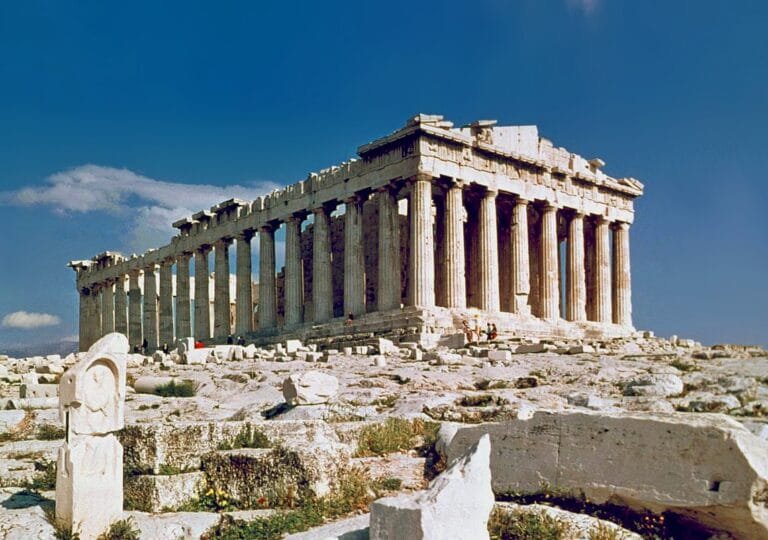
Athens, Greece – In the civilization of ancient Greece, names were not merely tools for identification; they were condensed identities reflecting religious, social, and value-based dimensions. The Greeks formed a unique naming system, linking family aspirations, divine protection, and mythological symbols, making a name a historical document telling the story of an individual’s place in society.
Naming as a Spiritual Shield: The Link to Gods and Myths
Gods were the primary reference for name selection. It was common to draw inspiration from the Olympians, such as Zeus, Athena, and Apollo. The goal was not just seeking blessings, but a belief that the name bestowed divine protection and symbolic attributes related to the deity’s nature. Additionally, Greeks drew from epic characters like Achilles and Odysseus as ideal models, seeking to emulate traits of courage, intelligence, and superhuman strength in the new generation.
Family Memory: Continuity of Lineage and Honoring Ancestors
Within city-states like Athens and Sparta, family ties were the backbone of society. Thus, it was an established tradition to choose names of ancestors for newborns to preserve family memory and ensure the continuity of the lineage. This tradition was not merely an echo of the past, but an expression of the family’s pride in its roots and an affirmation of the individual’s role as a link in an extended chain of social existence.
A Flexible System in a Changing Social Context
Historians explain that the Greek name was “dynamic.” Additional titles could be added to an individual based on personal achievements, birthplace (local affiliation), or origins. This system helped distinguish individuals in societies that relied heavily on “local citizenship” as a primary reference for identity.
A Lasting Legacy: From the Mediterranean to the Modern World
With the expansion of Greek civilization across the Mediterranean, their names became “cultural symbols” that crossed borders. Those names did not vanish with the end of the classical era; they remained alive in Western languages and literatures, retaining their ancient connotations as one of the most sophisticated forms of human cultural communication.
Ultimately, researchers conclude that the naming system of the Greeks was an embodiment of their worldview, where myth, religious commitment, and family bonding merged into a single linguistic mold, proving that a name was an “identity” before it was a word.