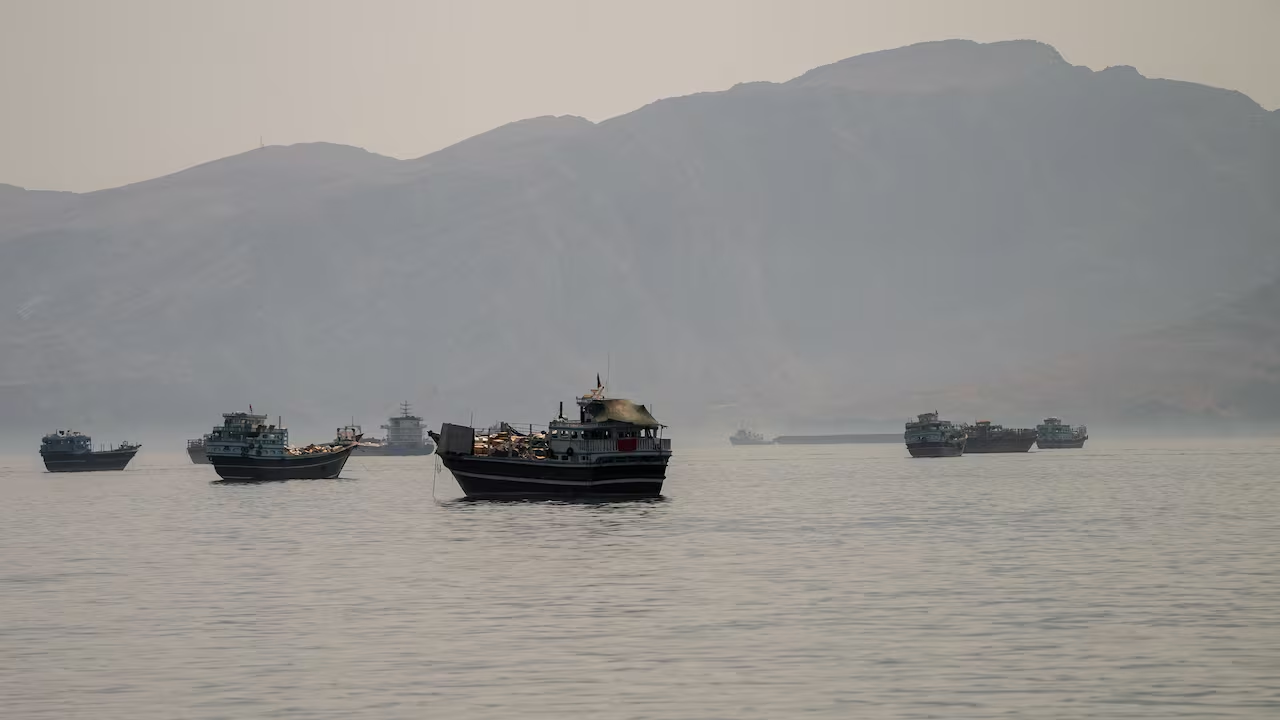
Washington, DC – US Central Command (CENTCOM) announced on Monday the start of a large-scale military operation, dubbed “Project Freedom,” in the Strait of Hormuz, involving 15,000 US troops. This move comes in response to directives from US President Donald Trump. The operation aims to secure international shipping lanes and evacuate commercial vessels stranded in the strategic waterway.
In a press statement, President Trump described the operation as primarily a “humanitarian mission.” He noted that many ships and their crews, from countries not involved in the conflict, were facing difficult conditions and severe shortages of food and basic supplies due to the restrictions imposed in the Persian Gulf. Trump also issued a stern warning that any attempt to interfere with or obstruct the operation would be met with a “firm and immediate” military response from U.S. forces.
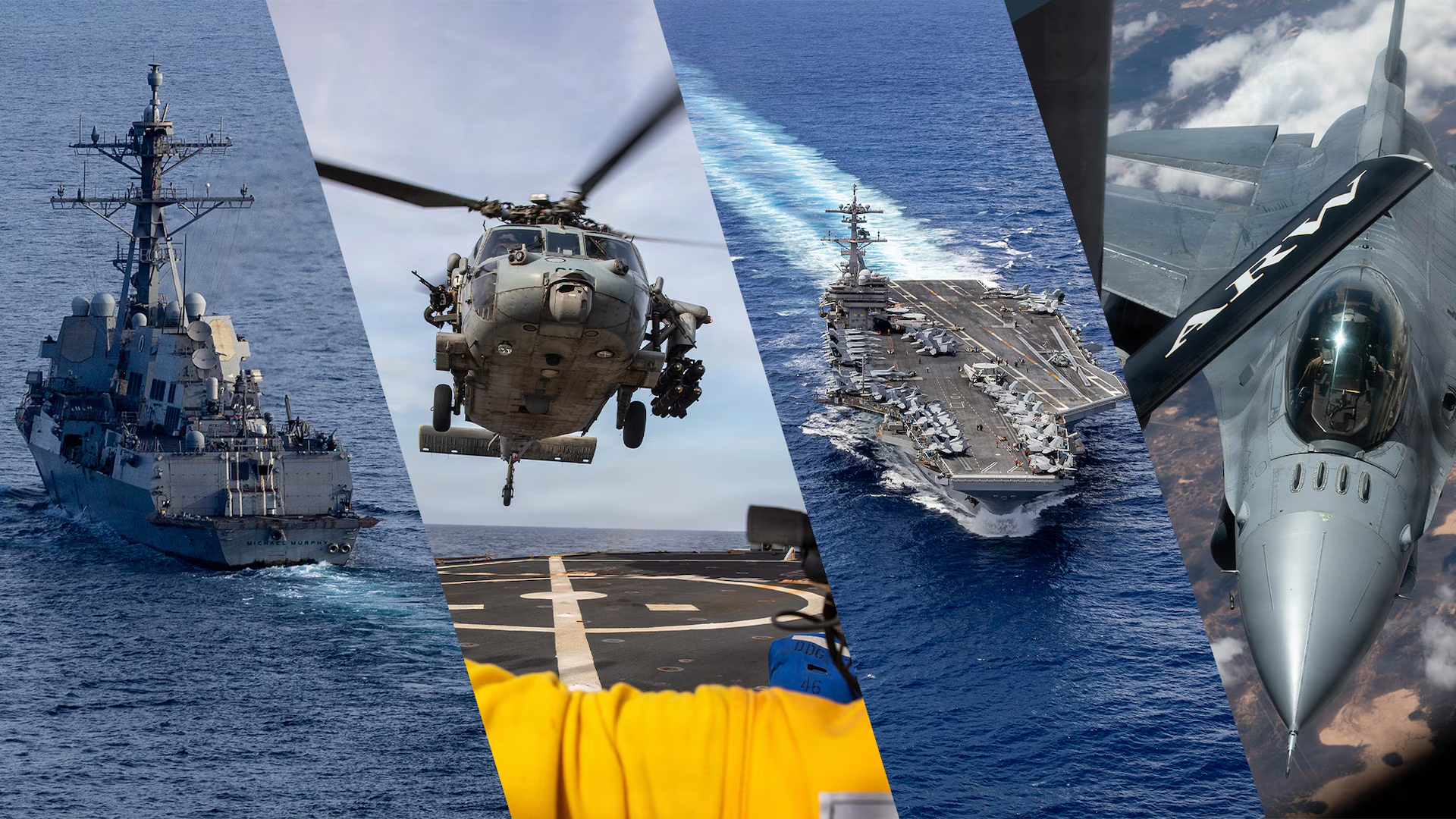
For its part, Central Command explained via its official X platform that military support for “Project Freedom” will not be limited to personnel alone. It will also include a sophisticated arsenal comprising guided-missile destroyers and more than 100 naval and land aircraft. Furthermore, it will include multi-mission drone platforms. The Command emphasized that the central objective is to ensure the “free passage” of commercial vessels through this vital global trade route.
In a related development, the Axios news website quoted US officials as saying that warships will be positioned “close” to shipping lanes for rapid intervention should Iranian forces attempt to target commercial vessels.
The US Navy will also provide ship captains with precise intelligence on the safest maritime routes, with a particular focus on avoiding areas where Iran may have laid sea mines.
Despite the large military buildup, The Wall Street Journal reported that the current mechanism of “Project Freedom” represents the core of an international coordination effort involving insurance companies and shipping organizations. Its initial phase does not include direct escorts of ships by warships, but rather focuses on guidance and territorial protection.
These moves coincide with Tehran’s submission of a plan to reopen the Strait of Hormuz and end the naval blockade of its ports. Iranian officials confirmed they have received the American response to their proposals and are reviewing it. This comes amidst an atmosphere of heightened military and diplomatic anticipation.