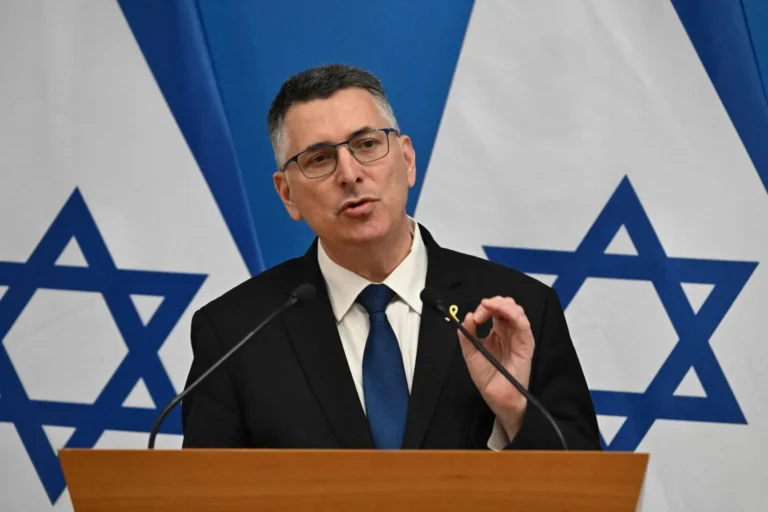
Tel Aviv, Israel – In a striking statement reflecting a new diplomatic direction ahead of an anticipated round of negotiations in Washington, Israeli Foreign Minister Gideon Sa’ar asserted that Israel has no “serious disagreements” with the Lebanese state. However, he indicated that the real obstacle to stable relations is Iranian influence, represented by Hezbollah.
A historic decision to negotiate directly
During a celebration of Israel’s Independence Day attended by foreign diplomats, Sa’ar described the decision to negotiate directly with Beirut as a historic step. He said, “After a period of estrangement and conflict lasting more than 40 years, we made a strategic decision to sit down and negotiate directly with the Lebanese side.” The Israeli minister explained that the outstanding issues between the two sides are limited to “minor border disputes.” These disputes can be resolved through technical and political dialogue. He also emphasized that the true essence of the conflict is not with the Lebanese people or their state institutions.
Hezbollah: “The common enemy”
Saar sharply criticized Iran’s role in the region, asserting that Lebanon is suffering under indirect occupation through “Tehran’s proxies.”
He stated, “Hezbollah is the common enemy of both Israel and Lebanon; it threatens our national security, erodes Lebanon’s sovereignty, and jeopardizes the future of its coming generations.”
The Israeli Foreign Minister emphasized that “only one thing stands in the way of peace and the normalization of relations between Jerusalem and Beirut, and that is the Hezbollah organization.”
Call for cooperation in Washington
In a direct message to the Lebanese government ahead of the Washington talks, Saar called on Beirut to take courageous stances and cooperate in confronting the “military and security structures” that Hezbollah has established outside the framework of the state.
He asserted that this cooperation is not only in Israel’s interest, but also “an absolute necessity for Lebanon to regain its health and sovereignty.”
These statements come at a time when the international community is awaiting the outcome of the Washington talks. Questions are also being raised about the Lebanese government’s ability to engage in negotiations aimed at resolving border disputes. This is occurring against a backdrop of the complexities on the ground and the political landscape, exacerbated by Hezbollah’s weapons and the escalating tensions along the Blue Line.
Observers believe that Saar’s conciliatory tone toward the Lebanese state is intended to isolate Hezbollah politically and hold it responsible for any failures that may arise in future diplomatic efforts.