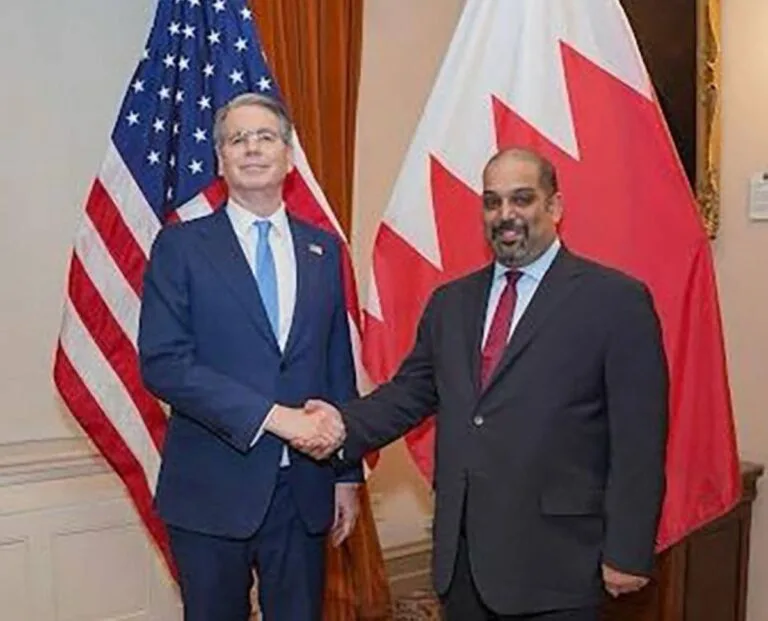
Manama, Bahrain – H.E. Shaikh Salman bin Khalifa Al Khalifa, Bahrain’s Minister of Finance and National Economy, held an official discussion session with H.E. Scott Bessent, the US Secretary of the Treasury, focused on ways to strengthen financial and economic cooperation between the two friendly nations. This meeting came within the framework of ongoing coordination to address current global economic challenges and develop prospects for joint investment. Accordingly, the economic cooperation between Bahrain and the United States represents a fundamental pillar for supporting sustainable development plans and reinforcing the Kingdom’s position as a leading financial hub in the region, linked to global markets through solid partnerships.
Washington Spring Meetings: A Platform for Developing Financial Relations
On the sidelines of their participation in the Spring Meetings of the International Monetary Fund (IMF) and the World Bank Group in Washington D.C., both sides reviewed the trajectory of bilateral relations and their steady growth in vital sectors. Obviously, the discussions focused on the importance of global financial market stability amid the rapid economic transformations the world is experiencing. As a result, both parties emphasized the necessity of concerted international efforts to ensure the resilience of the global economy and its ability to overcome shocks, while enhancing economic growth opportunities that positively reflect on people’s prosperity.
Joint Investment Prospects and the Role of International Financial Institutions
The meeting also addressed prospects for expanding cooperation in investment and financial innovation fields to serve shared strategic goals. Certainly, continued coordination between financial institutions in Manama and Washington contributes effectively to supporting regional economic stability, especially amid current geopolitical tensions. Accordingly, the economic cooperation between Bahrain and the United States remains a model for successful partnerships striving for sustainable stability, with anticipation for further initiatives to boost bilateral investment flows and support non-oil sectors.