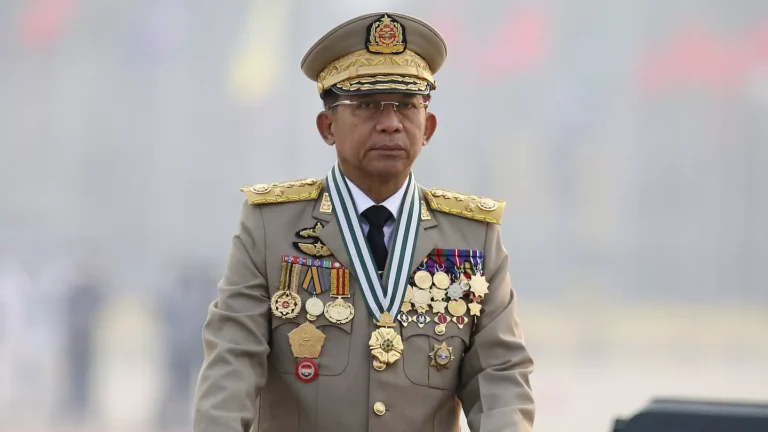
Naypyidaw, Myanmar – In a move aimed at consolidating military power under a civilian guise, the Myanmar parliament elected military junta leader General Min Aung Hlaing as president of the Republic of Myanmar (Burma) on Friday. This inauguration comes five years after the general’s bloody military coup in 2011. It effectively reshapes the country’s political landscape to ensure his continued rule, shielding him from international accountability.
Vote count and majority threshold
According to a vote count conducted by AFP inside the parliament chamber, General Min Aung Hlaing received 293 votes out of 584 cast. This surpasses the required majority to assume the presidency. The vote took place under tight security in the capital, Naypyidaw. Pro-military lawmakers, appointed or elected in a vote overseen by the military junta, also participated. The entire process was marked by the complete absence of any genuine opposition.
From coup to “guided democracy”
Aung Hlaing overthrew the civilian democratic government in February 2021, leading a military coup that ended with the arrest of the elected leader, Aung San Suu Kyi, and the dissolution of her party, the National League for Democracy. As a result, the country descended into a spiral of violence and political and economic turmoil.
Through this parliamentary move, the general seeks to legitimize his rule and present himself to the international community as the elected civilian president.
Civilian facade and international criticism
While the military junta promoted the reopening of parliament last month as a “return of power to the people,” political analysts and Asia experts described the move as merely a “civilian façade” intended to legitimize continued military rule and improve the regime’s image.
Observers believe that Hlaing’s election will not change anything, as the security apparatus remains the primary driver of the state. Meanwhile, the opposition and democratic figures remain imprisoned. This leaves Myanmar facing further international isolation and internal tensions.