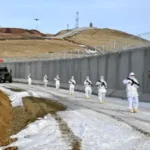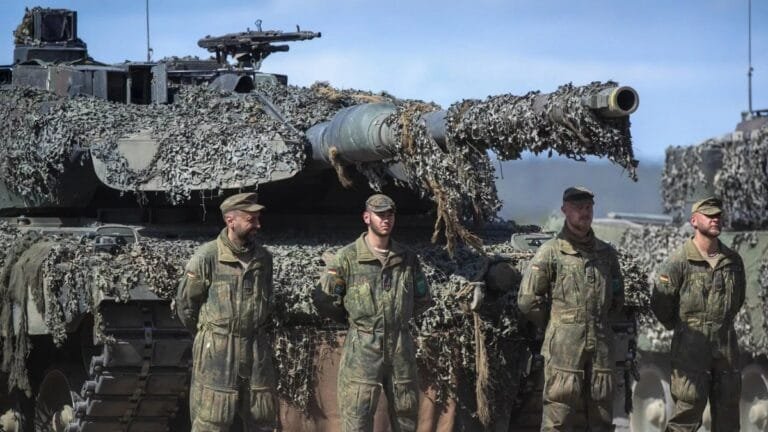
Nuuk, Greenland – Several NATO member states have begun deploying troops to Greenland to participate in military exercises called Operation Polar Endurance. This move reflects escalating political tensions between European allies and Washington, stemming from US President Donald Trump’s insistence on annexing the strategically located Arctic island. The deployment also follows tense talks at the White House, which failed to resolve the fundamental disagreement between the United States, on one side, and Denmark and Greenlandic authorities, on the other, regarding the island’s future.
A fundamental disagreement remains unresolved.
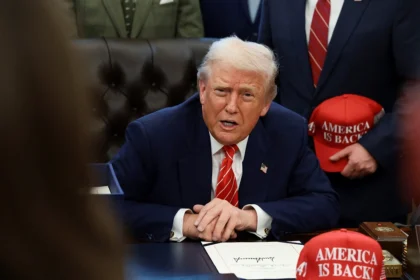
Washington hosted high-level meetings between the foreign ministers of Denmark and Greenland and US Vice President J.D. Vance and Secretary of State Marco Rubio. Danish Foreign Minister Lars Løkke Rasmussen acknowledged that the talks were frank and constructive. However, he also confirmed that a fundamental disagreement remained unresolved. Meanwhile, US President Donald Trump reiterated his public stance, stating from the Oval Office that the United States needs Greenland for its national security. This statement was met with staunch rejection from Danish leaders and the island’s inhabitants, who emphasized that Greenland is not for sale. Despite the parties agreeing to form a high-level working group to discuss the island’s future, a significant political gap remains between the US position and the stance of the Europeans and Greenland’s self-governing authorities.
European mobilization in the Arctic
In a clear response to US pressure, Denmark and its European allies announced a strengthening of their military presence on the island through Operation Arctic Endurance, which includes the deployment of multinational forces and joint exercises. French President Emmanuel Macron confirmed that the first French units had already begun moving to participate in the maneuvers. Meanwhile, Germany sent a military reconnaissance team to the capital, Nuuk, to study maritime security and surveillance arrangements. Sweden and Norway also announced that officers from their armed forces would be joining the joint force on the island. These military moves focus on protecting critical infrastructure, conducting maritime operations, and deploying fighter jets in the Arctic region, given its growing strategic importance.
Political backgrounds and new balances
Observers believe that Trump’s renewed talk of annexing Greenland is part of a more assertive foreign policy. This policy is driven by what Washington considers the successes of previous military interventions. Meanwhile, Denmark is attempting to counterbalance American pressure by increasing its defense spending, including plans to purchase additional F-35 fighter jets. Furthermore, there is a rise in investment in Greenland’s infrastructure.