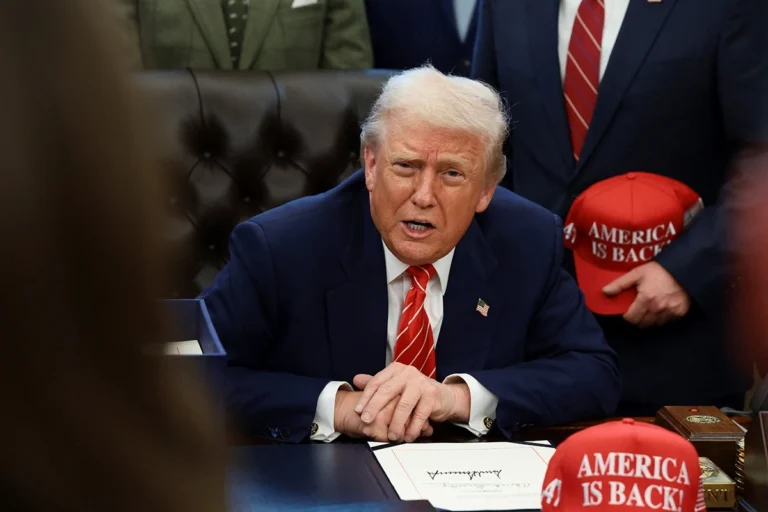
Washington, DC – US President Donald Trump dropped a bombshell on his Truth Social platform, sharing an article from The Washington Post that discussed potential escalation scenarios with Tehran. He also added comments that were described as an implicit admission of the crippling nature of Iran’s defense capabilities.
The language of collapsing numbers: “total destruction”
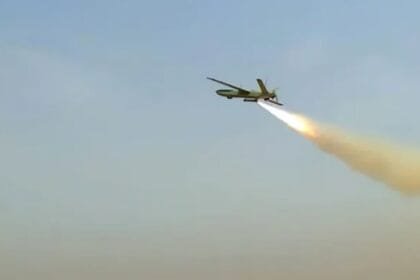
Trump wrote in his post, which swept across social media platforms and decision-making centers: “The air defense, air force, navy, and command in Iran have been destroyed.”
This statement was not merely a military description. Rather, it seemed like an accounting of the results of the violent military strikes that Iran had recently been subjected to.
Trump did not stop at the military assessment, but revealed a tense diplomatic behind-the-scenes story, saying: “They want to have talks, but I told them it’s too late.”
This stance reflects a radical shift from the “maximum pressure” policy he pursued in his first term. He has moved to a policy of “complete closure” to negotiations in light of the current open confrontation.
Letters in incoming and outgoing mail
Political analysts believe that the timing of this publication is not spontaneous, but rather carries multiple strategic implications:
Domestically, Trump is using this escalating rhetoric to present himself as a “strong leader” capable of resolving outstanding issues militarily. This comes especially amidst intensifying domestic debate about the cost of American involvement in Middle Eastern conflicts.
For those outside (Tehran and its allies), the message is clear: Washington is no longer content with containment, but has moved to a phase of “dismantling capabilities.” Furthermore, a return to the negotiating table will not be under the old conditions. Perhaps it will not be possible at all in the near future.
Silence in Tehran and international concern
On the other hand, a complete silence prevailed in Iranian official circles following Trump’s statements. Neither the Foreign Ministry nor the Revolutionary Guard issued an immediate comment. Meanwhile, the international community is waiting to see whether this silence is the “calm before the storm” or an acknowledgment of the difficult situation on the ground after the targeting of command and control centers.