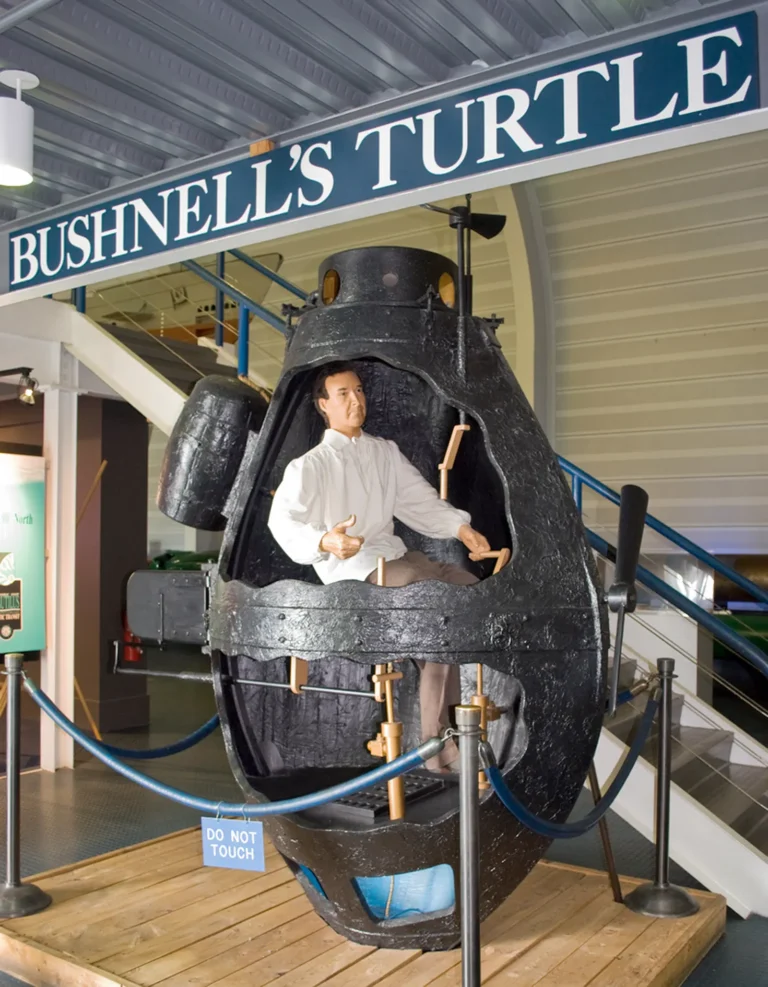
New York, USA – Long before the advent of modern submarines, the 18th century witnessed an unprecedented military experiment: the submarine “Turtle.”
This submarine entered history as one of the first submersible vessels to attempt an attack on a warship.
A secret method for attacking British ships
The Turtle submarine emerged during the American Revolutionary War.
It was designed by American David Bushnell to provide Revolutionary forces
with a covert means of attacking British ships anchored in harbors.
The submarine was extremely small, accommodating only one person.
Its operation was entirely man-powered, with the operator using manual mechanisms to maneuver and control it while submerged.
In 1776, an attempt was made to use the Turtle to attack the British ship HMS Eagle, which was docked in New York Harbor.
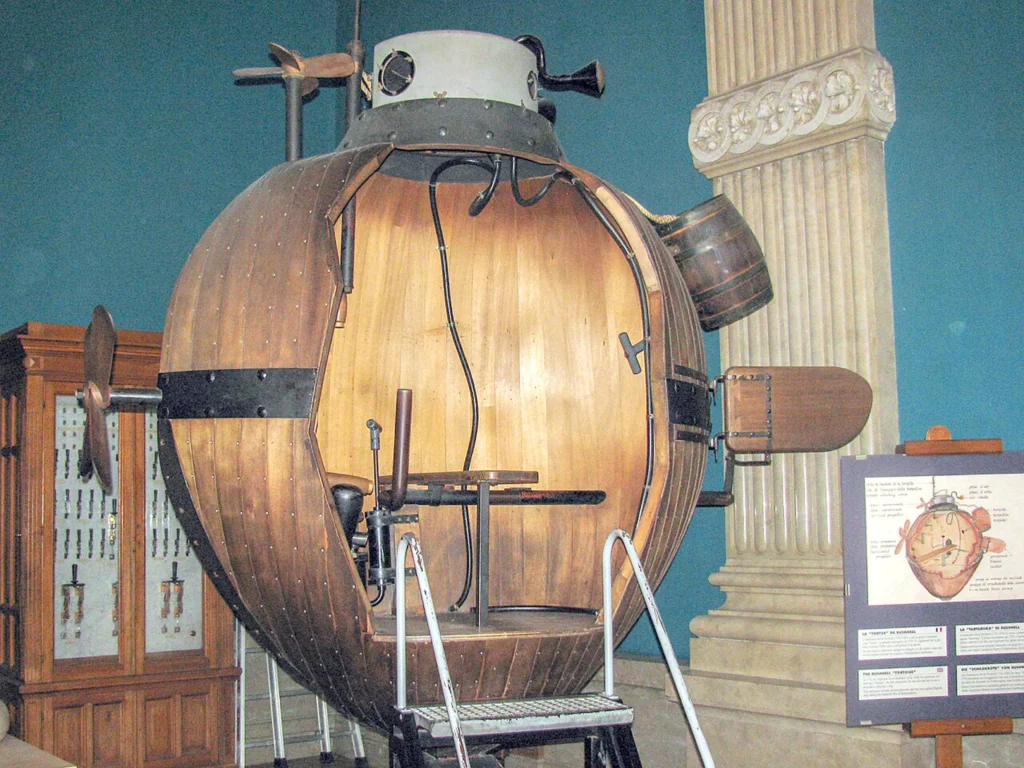
Turtle submarine plan to sink ships
The plan involved the submarine approaching the ship’s hull from below
and attaching an explosive device to it with the aim of damaging and sinking the vessel.
However, the mission failed. The submarine commander encountered
difficulties attaching the device and was ultimately forced to abandon the attempt.
Despite the attack’s failure, the USS Turtle marked a significant step in the history of underwater warfare.
It demonstrated, almost for the first time, the feasibility of using
a small submersible to conduct covert military operations against enemy ships.
More than two centuries later, the Turtle experiment remains one of
the most important milestones for historians tracing the development of submarines.
Submarines have evolved from primitive, single-person vessels
into sophisticated naval weapons that have transformed the nature of modern warfare.