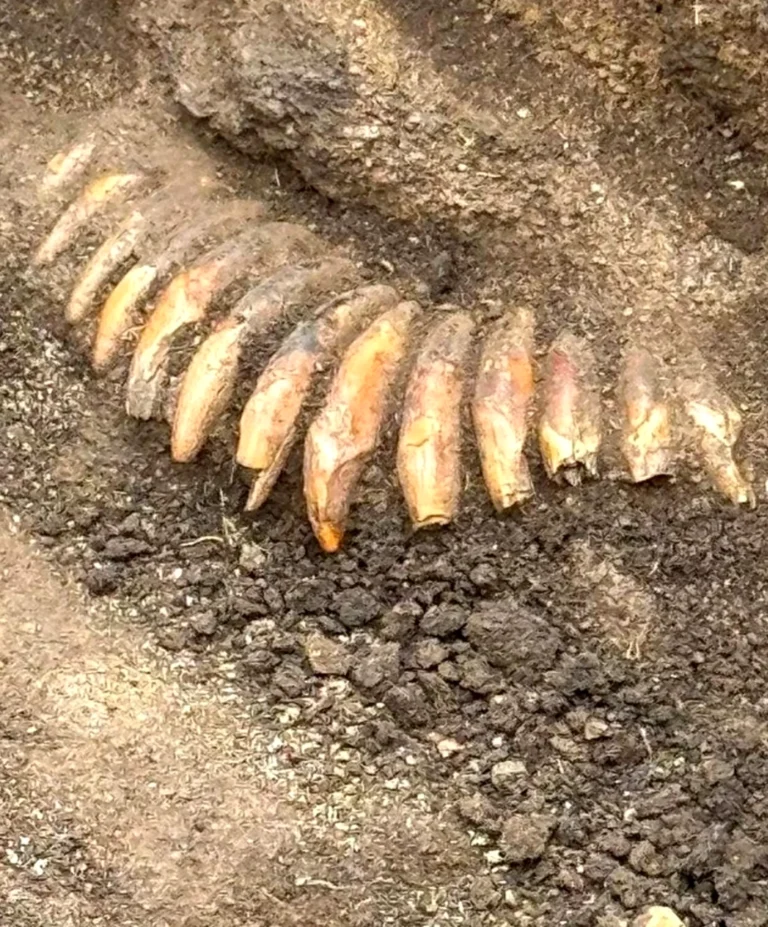
Warsaw, Poland – Archaeological work in Poland has uncovered a Stone Age tomb bearing a number of unusual details.
These details have prompted scientists to ask questions about the funerary rites and beliefs of ancient societies.
Inside the grave, researchers found human remains along with evidence of sacrificial practices.
They also discovered a necklace with an unusual design, making the site a point of interest for archaeologists.
These scientists are working to understand the circumstances surrounding the burial of the remains.
Study of the tomb’s contents and burial coin
The study of the grave’s contents suggests that the burial was not necessarily a traditional funerary rite.
Some objects appear to have been placed with the deceased for symbolic or religious purposes.
This reflects the importance of beliefs and ritual practices in the lives of communities during the Stone Age.
The necklace is of particular significance. Researchers believe its shape and placement
within the grave may provide information about the symbols used by the region’s inhabitants in their rituals and beliefs.
The human remains found at the site also represent an important source
for understanding the nature of this ancient society,
especially as scientists continue to analyze them, searching for clues to the ages and living conditions of the deceased.
The analysis may also reveal the causes of their deaths.
An exceptional case in the discovery of ancient tombs
Researchers are still working to study all the discoveries and connect them to the archaeological context of the site.
These efforts aim to determine whether the discovered practices were
an isolated case or part of broader traditions known to the region’s inhabitants.
The discovery confirms that ancient tombs provide information not only
about death but also reveal aspects of the lives of the communities that built them,
including their beliefs, fears, rituals, and relationship with the world around them.