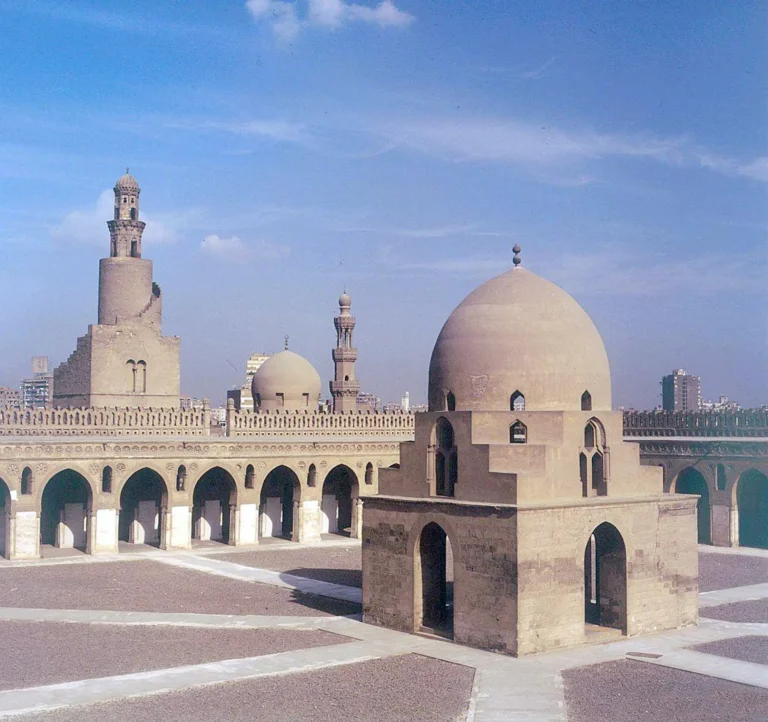
Cairo, Egypt – The “Ashari” is one of the most prominent architectural elements that distinguish some of the historical minarets in Egypt, as it appears on the tops of the minarets of the Mosque of Ahmed Ibn Tulun and the Mosque of Imam Al-Shafii, carrying historical connotations that reflect the connection of Islamic architecture to daily life and Egyptian heritage.
Symbolic status in society
The name “Ashari” derives from a type of wooden Nile boat that was historically used to transport grain and goods across the Nile River.
It was also associated with charitable acts, as some wealthy individuals dedicated it to distributing food and alms to the needy, thus acquiring a symbolic status in society.
Egyptian architects drew inspiration from the shape of these boats, incorporating it as a decorative element adorning the tops of some minarets. This expression combines art and symbolism,
reflecting the deep connection between Egyptian civilization and the Nile as a source of life and prosperity throughout the centuries.
Incorporating symbols of the Egyptian environment into designs
The Mosque of Ahmad Ibn Tulun, built in the 9th century AD, is one of the most famous mosques that preserves this unique architectural style, along with the Mosque of Imam al-Shafi’i.
The “Ashari” minaret continues to attract the attention of visitors and those interested in Islamic heritage.
Archaeological experts confirm that this architectural element represents a part of the artistic identity of Islamic architecture in Egypt,
reflecting the ability of ancient builders to incorporate symbols of the Egyptian environment into their designs.
The minarets remain witnesses to a history that combines architectural ingenuity with cultural significance.