
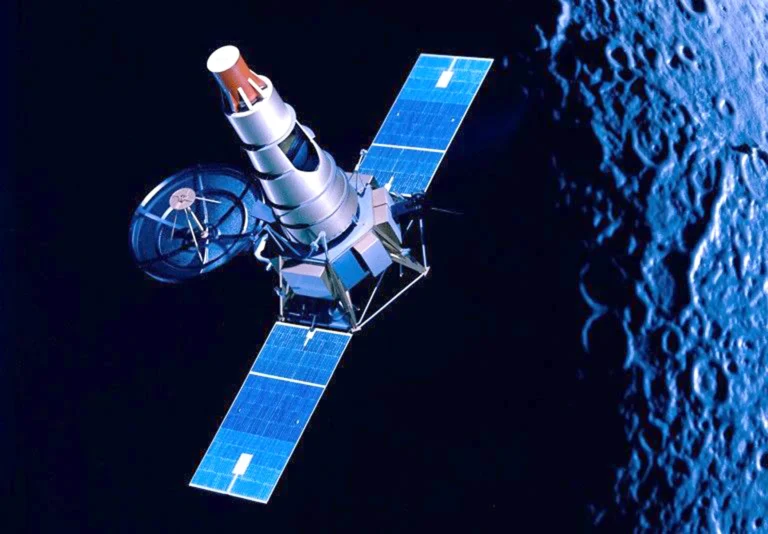
Washington, United States – NASA’s Ranger 7 mission marked a turning point in the history of space exploration, after it succeeded in 1964 in capturing the first close-up, high-resolution images of the moon’s surface,
paving the way for the manned landing missions that came a few years later.
Detailed representations of craters, rocks, and terrain
The mission’s success came after a series of setbacks faced by the Ranger program,
as the probe managed to send more than four thousand images
during the final minutes before it crashed into the moon’s surface,
revealing minute details of craters, rocks, and terrain that humans had never seen with such clarity.
Collecting accurate data from celestial bodies
These images allowed scientists to study the lunar surface and select safer landing sites for the Apollo program,
directly contributing to the success of the first human landing on the Moon in 1969,
when astronauts first set foot on its surface.
The mission also solidified the United States’ position in the space race during the 1960s
and demonstrated the ability of space technologies to collect precise data from celestial bodies,
making Ranger 7 one of the most important milestones that paved the way for the modern era of space exploration.