
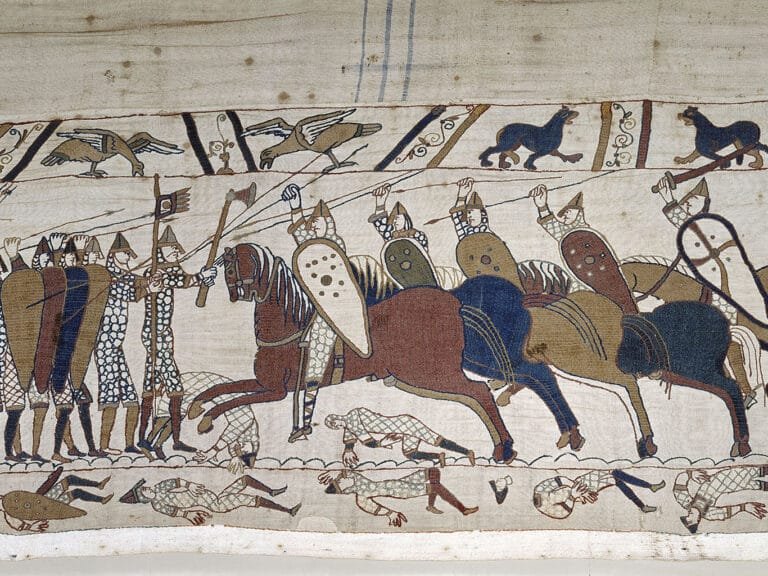
London, United Kingdom – The Battle of Hastings is one of the most significant events in European history. It was not merely a military confrontation between two armies,
but a turning point that ended one reign and ushered in a new era, reshaping England’s political, cultural, and military identity for centuries to come.
The battle took place on October 14, 1066, between the forces of King Harold II of England and the army of William, Duke of Normandy, later known as William the Conqueror.
The confrontation followed a succession crisis in England after the death of King Edward the Confessor, with several leaders vying for the throne.
Radical changes in the structure of the English state
William led a large army across the English Channel and landed his troops on the south coast of England.
The two armies then clashed near the town of Hastings in a battle that lasted for hours and featured fierce fighting between infantry, cavalry, and archers.
The battle ended with the death of King Harold II, who, according to historical accounts, was struck in the eye by an arrow before succumbing to his wounds.
This led to the collapse of English resistance and paved the way for William to enter London and declare himself King of England in December of the same year.
This victory led to radical changes in the structure of the English state. William redistributed land among the senior Norman commanders,
introduced a new feudal system, and ordered the construction of dozens of castles and fortresses to consolidate his power.
Among the most famous is the Tower of London, which has become one of the country’s most prominent historical landmarks.
A battle that was one of the most influential events in British history
The Norman Conquest also profoundly impacted the English language, with thousands of words of French origin entering daily life,
administration, and the legal system, contributing significantly to the formation of modern English as we know it today.
To consolidate control over the kingdom, William commissioned the Doomsday Book in 1086, the first comprehensive record of land, population, and wealth in England.
It is considered one of the most important historical documents, providing an accurate picture of the country in the Middle Ages.
Historians believe that the Battle of Hastings not only changed the nature of governance in England but also reshaped English society as a whole,
cementing Norman influence that extended to politics, law, architecture, and culture. This battle remains one of the most influential events in the history of Britain and Europe.