
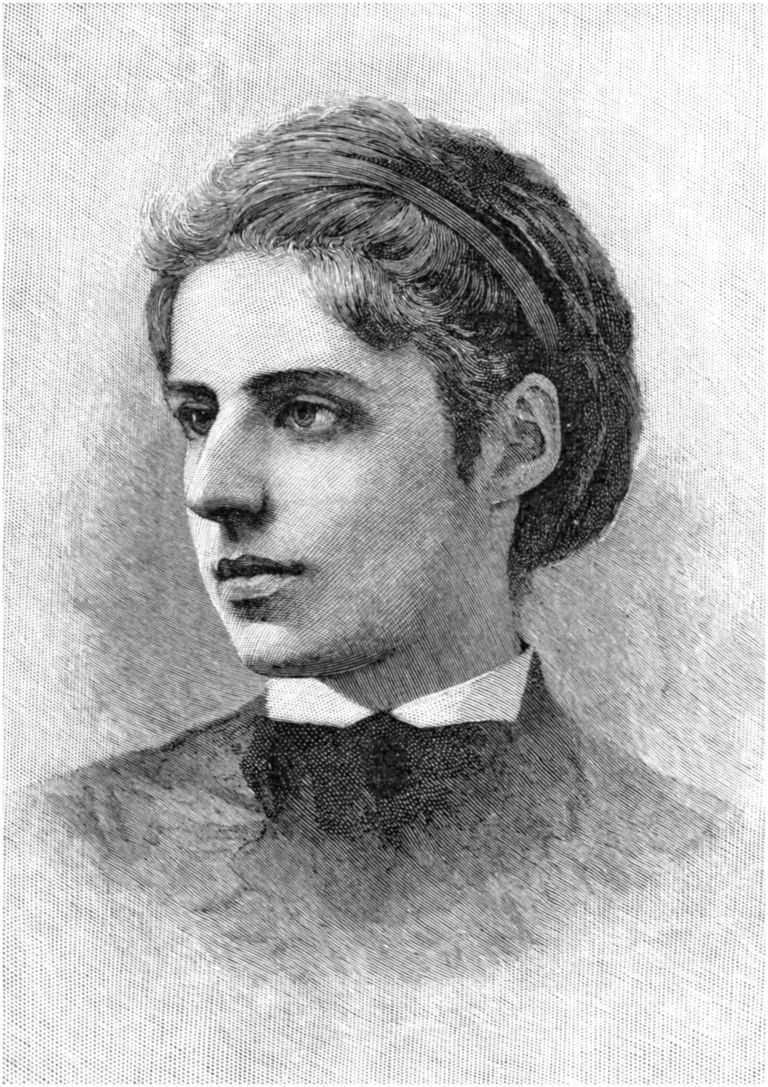
New York, USA – American poet Emma Lazarus is one of the most prominent names in the history of American literature.
Her name is synonymous with her famous poem “The New Giant,”
which has become an integral part of the symbolism of the Statue of Liberty.
Her poem also became a welcoming message to immigrants coming to the United States in search of hope and a better life.
Emma Lazarus was born in New York City in 1849 to a wealthy Jewish family of Portuguese descent.
She grew up in an environment that valued culture and education, which helped her discover her literary talent at a young age.
She began writing poetry as a teenager and published her first work before she turned twenty.
Issues of identity, justice, and humanity
Lazarus distinguished herself as a writer and poet whose works explored themes of identity, justice, and humanity.
She championed the rights of refugees and immigrants, particularly Jews fleeing persecution in 19th-century Europe.
She dedicated her writing to supporting humanitarian initiatives and raising funds to aid them.
In 1883, she wrote the poem “The New Giant” to contribute to a fundraising campaign for the pedestal of the Statue of Liberty.
Little did she know that her words would later become the most famous literary text associated with the statue.
Lines from the poem were inscribed on a bronze plaque inside the pedestal in 1903.
The poem includes the famous phrase calling for welcoming “the weary, the poor, and those who dream of a new life.”
For this reason, it became a global symbol of freedom, openness, and the welcoming of immigrants,
cementing the Statue of Liberty’s status as more than just a tourist attraction.
Shaping American cultural consciousness
Although Emma Lazarus passed away in 1887 at the age of 38 after a battle with illness,
her literary and humanitarian influence remains present to this day.
Her works are taught in schools and universities, and she is considered one of the figures
who helped shape American cultural awareness regarding immigration and human rights.
The story of Emma Lazarus continues to exemplify literature’s ability to transcend time.
A poem written to support a charitable project became a timeless humanitarian message
associated with one of the world’s most famous landmarks.
Her words stand as a testament to her belief in freedom, hope,
and the human right to seek a better future.