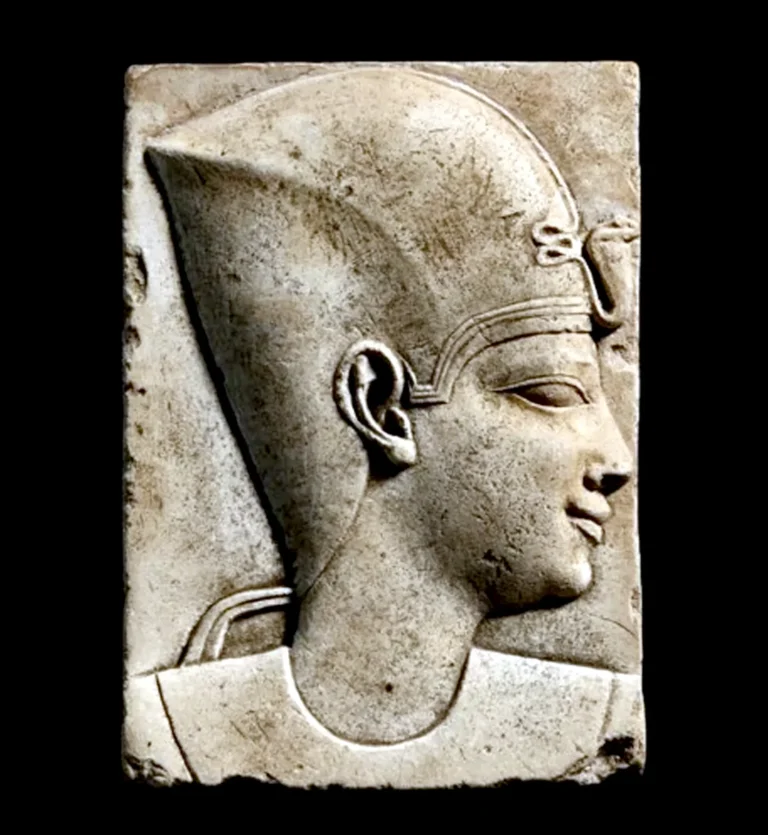
London, UK – A rare Egyptian limestone artifact depicting King Nectanebo II fetched a high price at an international auction in London, selling for approximately £63,000.
The sale attracted significant interest from collectors and those interested in ancient Egyptian antiquities.
The artifact portrays King Nectanebo II, the last ruler of the Thirtieth Dynasty
and the last Egyptian pharaoh to rule before the country fell under Persian rule in 343 BC.
His reign is considered a pivotal period in ancient Egyptian history, marked by extensive temple construction and restoration.
Despite the military and political challenges facing the country, this activity continued.
Features of the carved piece
The limestone sculpture is distinguished by its exquisite detail,
depicting the king’s features in the artistic style prevalent in the late Pharaonic period.
This has endowed it with significant historical and artistic value for archaeologists and collectors alike.
The auction organizers noted that demand for ancient Egyptian artifacts remains strong in the global market,
particularly those associated with royalty or belonging to pivotal historical periods.
This was reflected in the final price, which exceeded initial estimates.
Widespread controversy surrounds the sale of Egyptian antiquities
The sale of Egyptian antiquities at international auctions occasionally sparks considerable controversy.
Egyptian authorities maintain that they are vigilant in monitoring artifacts offered abroad
and verifying the authenticity of their ownership documents.
They also take the necessary legal measures if any artifact is found to have been smuggled out of the country.
King Nectanebo II remains one of the most prominent rulers of ancient Egypt,
his name associated with efforts to defend the country’s independence against the Persian invasion.
He also left behind an architectural and religious legacy that is still evident in a number of Egyptian archaeological sites today.