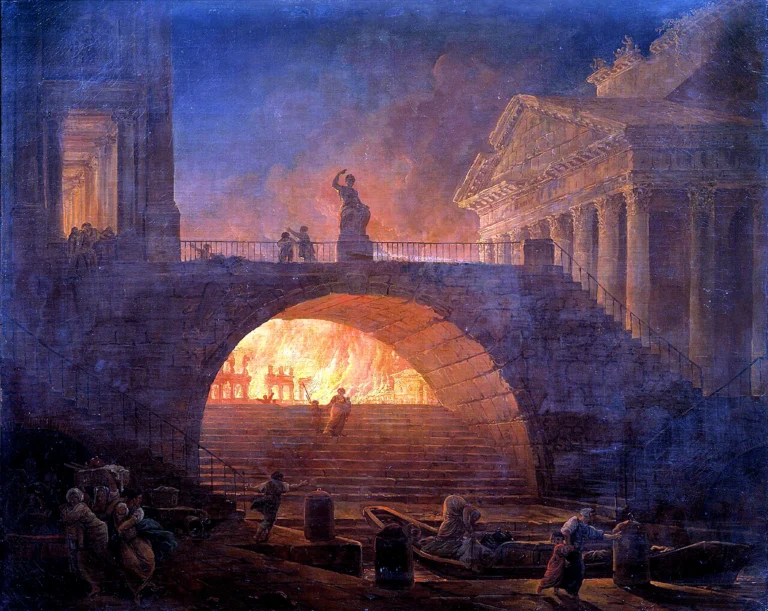
Rome, Italy – This day marks one of the most tragic events in ancient history. The Great Fire of Rome broke out in 64 AD,
leaving widespread destruction that engulfed much of the Roman capital.
The disaster lasted for several days and changed the city forever.
The fire started in the market area near the Hippodrome.
Fueled by strong winds and the closely packed wooden buildings,
the flames spread rapidly, consuming homes, shops, and temples.
The rudimentary fire brigades of the time were unable to control the blaze.
A scene of ruin and smoke
The fire devastated large parts of Rome. Historical sources indicate
that most of the city’s districts were either completely or partially destroyed.
Thousands of residents were forced to flee their homes, leaving the Roman capital a scene of ruin and smoke.
The fire became associated with Emperor Nero, after accounts circulated
accusing him of causing the disaster or failing to prevent it.
Some sources claimed he was playing music while the city burned.
However, many modern historians believe
these accounts lack conclusive evidence and that they may have been
part of a political campaign to discredit him.
Nero and the project to rebuild Rome
In the aftermath of the fire, Nero launched a massive reconstruction project for Rome,
which included building more robust structures and widening the streets.
He also introduced new building codes designed to reduce the risk of future fires.
He even built his famous palace, known as the “Golden House,” on part of the fire-ravaged land.
The Great Fire of Rome remains one of the most infamous disasters in history,
not only because of the scale of the destruction it caused,
but also because it sparked centuries of historical and political debate surrounding Emperor Nero’s responsibility.
It also had a profound impact on the course of the Roman Empire.