
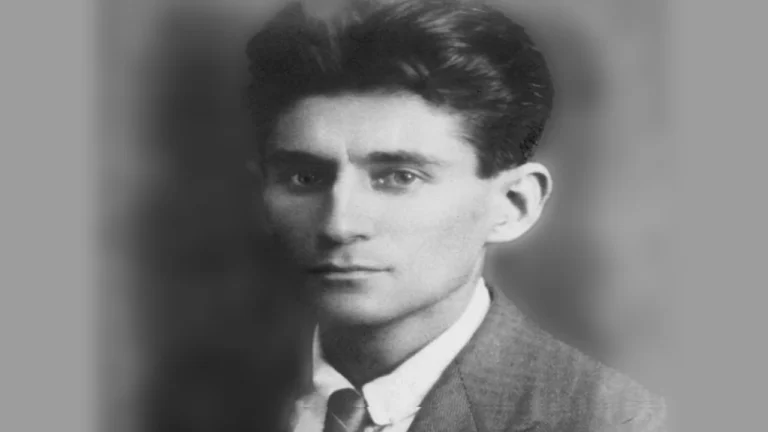
Prague, Czech Republic – The stance of the famous Czech writer Franz Kafka on the Zionist movement remains a subject of debate among historians and researchers, despite more than a century having passed since his writings. Interpretations vary between a perspective that he showed interest in some Zionist ideas, and another affirming that he was not politically involved or a supporter of the movement in an organizational sense.
Roots of the Debate: Letters and Personal Interests
Part of this controversy relies on documentation, represented by Kafka’s letters and diaries, which showed his interest in learning the Hebrew language. Kafka also maintained relationships with individuals who were close to Jewish and Zionist cultural circles in Europe, in addition to discussing the idea of traveling to Palestine on some occasions without actually executing it.
Alternative Interpretation: Seeking Identity, Not Politics
Conversely, a number of researchers point out that Kafka’s writings are devoid of clear political stances supporting the Zionist project. These researchers believe that his interest in Jewish language and culture stemmed from his quest for his personal and spiritual identity, rather than being an adoption of a specific political position.
Complexities of Historical Classification
Historians believe that Kafka’s complex personality, along with his early death in 1924 before the establishment of the State of Israel, made it difficult to categorize him politically. This complexity is what has kept the door open for divergent readings based on his letters, diaries, and the testimonies of those close to him.
Literary Legacy Transcends Political Frameworks
Specialists in European literature confirm that Kafka’s literary legacy has transcended this political debate, as his novels and short stories remain among the most prominent works that addressed alienation, bureaucracy, and existential anxiety. The discussion regarding his intellectual positions remains part of ongoing academic studies aimed at understanding his personality and the context of his life.