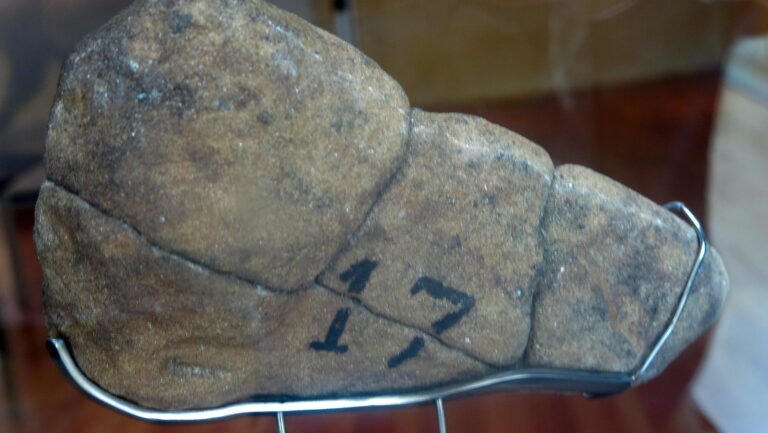
Jerusalem, Palestine – In a remarkable archaeological achievement, a team of archaeologists has unveiled a unique artifact dating back approximately 1,600 years to the Byzantine era: an oil lamp meticulously designed in the shape of a human foot. This discovery is not merely an ancient lighting tool but a visual document that reveals much about the artistic and religious symbols prevalent during the early spread of Christianity, opening a window into the rituals and spiritual concepts of that historical era.
Symbolic Meanings in an Unusual Design
The lamp bridges practical daily utility with deep symbolic significance. Researchers point out that the choice of a “foot” shape is likely not an artistic coincidence. In ancient Christian culture, the imagery of the foot was often associated with pilgrimage and “walking in the path of faith,” and may also embody the concepts of humility and service highlighted in early Christian teachings. This intersection between utility and symbol is an eloquent expression of how religious thought was woven into the daily details of Byzantine society.
Craftsmanship and Historical Resilience
The lamp was crafted from pottery with high artisanal skill. Despite being buried for over 16 centuries, it has remarkably retained its decorative details and structural integrity. This well-preserved state has allowed researchers to conduct precise comparisons with similar artifacts found in other regional sites, helping to paint a clearer picture of the cultural and artistic exchange network that connected the region’s cities at the time.
Enriching Knowledge of Byzantine Life
Archaeologists emphasize that this discovery is a qualitative addition to our understanding of religious and social life during the Byzantine era. It highlights how simple household tools served as effective mediums for expressing identity and belief, and reflects the evolution of craftsmanship and plastic arts at the time. The lamp remains a silent witness to a pivotal stage in the region’s history, where art and faith intersect to form a human legacy worthy of study and appreciation.