
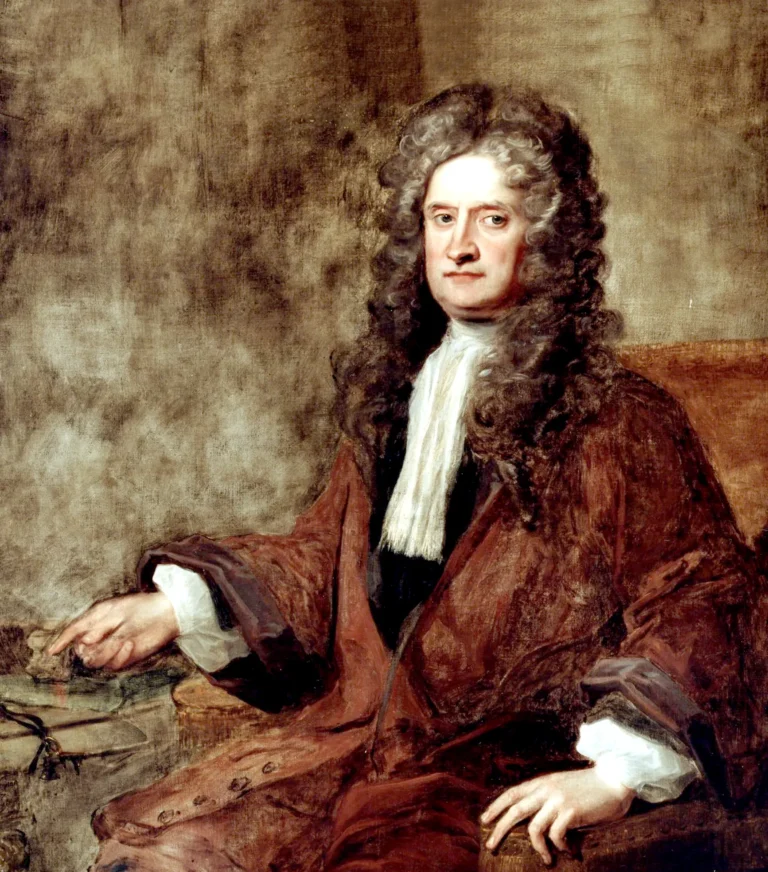
Cairo, Egypt – The story of gravity didn’t begin with Isaac Newton alone; it was preceded by centuries of questions about why things fall to Earth,
the movement of celestial bodies, and the relationship between Earth and the heavens.
Aristotle was among the most prominent philosophers who attempted
to provide a comprehensive explanation for the motion of objects.
He believed that every element has a natural direction it tends to reach.
Therefore, heavy objects, like stones, tend to fall, while lighter objects tend to rise.
Although this view differs from the modern concept of gravity, it was an early attempt to understand the phenomenon.
Accurate measurements and calculations of the Earth
Aristotle’s ideas remained influential for centuries before scientific observations
and experiments began to change the understanding of motion and the falling of objects.
In Islamic civilization, scholars emerged who were deeply interested in studying the Earth,
astronomy, and motion. Abu Rayhan al-Biruni was among the most prominent.
He conducted precise measurements and calculations of the Earth and discussed
issues related to motion, weight, and the falling of objects.
This was at a time when scientific tools were limited compared to those available to scientists in modern times.
Al-Biruni did not use the concept of gravity in the way we understand it today,
but he addressed important scientific questions about the nature of the Earth and the motion of objects.
He also contributed to the development of a methodology based on observation, calculation, and measurement.
As science progressed, the explanation of the motion of objects gradually shifted
from philosophy to experimentation and mathematics.
Galileo excelled in the study of falling and motion before Isaac Newton formulated the law of universal gravitation in the 17th century.
Understanding gravity was not a surprising discovery
Newton explained that objects attract each other with a force proportional to their mass and the distance between them.
This allowed for the explanation of numerous phenomena using the same law,
from objects falling to Earth to the movement of the moon and planets.
This journey reveals that understanding gravity was not a sudden discovery,
but rather the result of a long accumulation of scientific knowledge that began with the questions of philosophers.
It developed through the observations of scientists in various civilizations,
culminating in a precise mathematical formulation by Newton.
Thus, the quest transformed from a simple question—why do things fall?—into one of the most important laws
that has helped humanity understand the movement of the Earth, the heavens, and the universe.