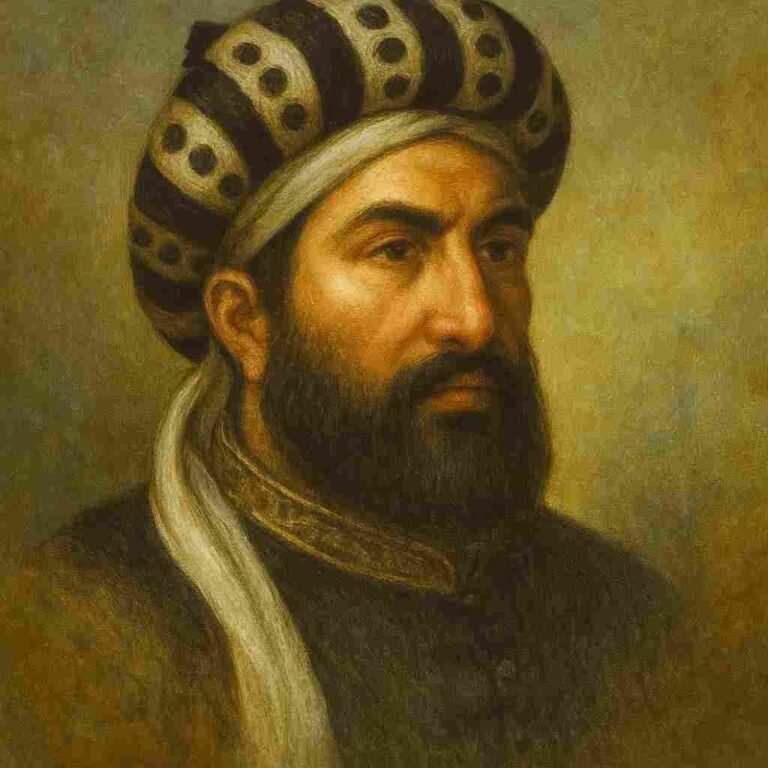
Aleppo, Syria – The Hamdanid Prince Abu al-Hasan Ali ibn Abd Allah ibn Hamdan, known as Saif al-Dawla al-Hamdani, is considered one of the most prominent rulers in Arab Islamic history. He succeeded in transforming the city of Aleppo into a flourishing political and cultural center, making his court a meeting place for great poets, writers, and scholars during the 10th century.
Saif al-Dawla’s name is associated with an era of exceptional cultural prosperity, as he attracted an elite group of literary and intellectual figures to his court. Chief among them was the great poet Abu al-Tayyib al-Mutanabbi, who composed his most famous poems in praise of the Hamdanid prince, immortalizing his military heroism and political stances.
Saif al-Dawla took control of Aleppo in 944 AD, managing to establish a powerful emirate in northern Levant, making it one of the most significant political forces in the region at the time. He also engaged in numerous battles against the Byzantine Empire and was renowned for his courage and military leadership, earning him great stature among his contemporaries.
Saif al-Dawla al-Hamdani as a Patron of Culture and Science
The prince’s role was not limited to the military aspect; he showed great interest in science and culture. He was a supporter of scholars, jurists, and linguists, and opened his palace doors to creators, which contributed to the prosperity of the literary and scientific movement in Aleppo, turning it into one of the most prominent cultural metropolises in the Islamic world.
His court witnessed the presence of other prominent figures alongside al-Mutanabbi, including the philosopher al-Farabi and Abu Firas al-Hamdani. The latter combined emirate and poetry, leaving a literary legacy that still holds a great position in Arab heritage to this day.
A Historical Legacy Immortalized in Arab Memory
Historians consider Saif al-Dawla’s reign one of the most important periods in Hamdanid history, as he succeeded in combining political power with cultural patronage. He presented a model of a ruler who consciously realized the importance of knowledge and literature in building civilizations and developing societies.
Despite more than a thousand years since his passing, the name of Saif al-Dawla al-Hamdani remains present in Arab memory as one of the most prominent princes who contributed to the renaissance of Arab literature. The prince left an immortal mark on the history of Islamic culture and civilization that time cannot erase.