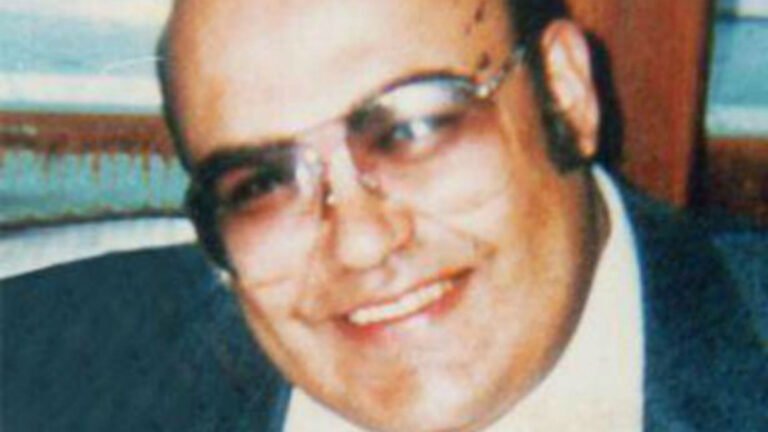
Cairo, Egypt – Egyptian writer and thinker Farag Foda is considered one of the most daring and influential voices in the Arab cultural landscape during the 20th century. He was distinguished by his direct analytical style in addressing issues of the civil state, political pluralism, and the limits of the relationship between religion and politics. His writings were not merely literary texts, but intellectual projects that sparked intense debates that still resonate today, making him a focal point for cultural and political elites.
On the other hand, Farag Foda‘s vision was characterized by accurate foresight regarding the dangers of extremist groups. He warned in his famous articles and seminars that extremist discourse is not just passing ideas, but a tool for destruction leading to escalating violence, weakening state institutions, and hindering development paths. Among the most prominent things he called for was the necessity of upholding citizenship values, accepting difference, and adhering to the rule of law as the sole reference in managing society’s affairs.
Education and Culture: The First Line of Defense
In a related context, Foda focused on the fact that the battle for enlightenment is essentially an educational and cultural one. He deeply believed that societies that embrace intellectual diversity and support freedom of expression are the most capable of facing complex social and political challenges. To him, intellectual closure was the primary enemy of any civilizational progress, calling for openness to global human thought.
Furthermore, June 8, 1992, remains a pivotal moment in the history of Arab thought. On that day, Farag Foda was subjected to a treacherous assassination attempt in front of his office in Cairo. That incident was not merely targeting an individual, but an attempt to silence the voice of reason, which caused a resounding shock and reopened the files of freedom of expression and the future of cultural renewal in the Arab region.
A Living Legacy in a Renewed Reality
On another note, contemporary researchers believe that Foda’s ideas were not linked only to his time. Many of the issues he addressed in his books, such as “The Absent Truth” and “Zawaj al-Mut’ah” (Pleasure Marriage), still constitute the core of the ongoing debate about the future of Arab societies. He possessed an exceptional ability to deconstruct political religious discourse and subject it to the microscope of historical and social criticism.
In conclusion, Farag Foda’s legacy continues to attract the interest of new generations of readers and researchers. In a phase where the region is witnessing rapid transformations and existential challenges, his vision emerges as a constant call to adhere to the values of enlightenment and intellectual liberation. His ideas remain present as an important reference for anyone seeking to understand the ongoing debate about identity and the state in the Arab world today.