Sign In
Wednesday, Jun 3, 2026
  • العربية
Top Header VOE Logo Header Dark Mode VOE Logo
  • Latest
  • Emirates
  • News
    • Gulf Countries
    • Arab Countries
    • World
  • Politics
    • Analysis
    • Interviews
    • Reports and investigations
  • Business
    • Companies
    • Real Estate
    • Stock Market
    • Green Energy
    • Oil And Gas
    • Bitcoin
    • Business Reports
  • Science and Tech
    • AI
    • Electric Vehicles
    • Space and Mars
  • Sport
    • World Cup 2026
  • Society
  • Health
  • Lifestyle
  • Travel and Hotels
Reading: When the Sky Darkened.. How Did Pre-Islamic Arabs Interpret the Solar Eclipse?
Share
Latest
Tesla Faces Internal Criticism Over Autonomous Driving Systems Amid Safety Concerns
Controversy in Silicon Valley: Apple Under Congressional Scrutiny for Closing Its First Unionized Store in the US
Rocket Explosion Leaves Massive Losses.. NASA Assesses Damages and Long-Term Recovery Plans
Preemptive Steps Ahead of the Developers Conference: Apple Unveils New Services and Features for Users
When the Sky Darkened.. How Did Pre-Islamic Arabs Interpret the Solar Eclipse?
Font ResizerAa
Voice Of EmiratesVoice Of Emirates
  • العربية
  • Latest News
Search
  • News
    • Emirates
    • Gulf Countries
    • Arab Countries
    • World
  • Politics
    • Analysis
    • Interviews
    • Reports and investigations
  • Business
    • Companies
    • Real Estate
    • Stock Market
    • Green Energy
    • Oil And Gas
    • Bitcoin
    • Business Reports
  • Science and Tech
    • AI
    • Electric Vehicles
    • Space and Mars
  • Lifestyle
  • Society
  • Sport
    • World Cup 2026
  • Health
  • Travel and Hotels
Have an existing account? Sign In
Follow US
All rights reserved © Voice of Emirates - News service from Our Media Group
Lifestyle

When the Sky Darkened.. How Did Pre-Islamic Arabs Interpret the Solar Eclipse?

From the Labyrinths of Myths and Omens of Death to the Rigor of Science and Faith: How Islam Dismantled Folk Beliefs of Eclipses and Founded the Era of Astronomical Observation

مدحت الشيخ
Last updated: 03/06/2026 6:59 am
Medhat Elsheikh
مدحت الشيخ
ByMedhat Elsheikh
News Editor
Medhat El-Sheikh, editor-in-chief of the Voice of Emirates News Agency office in Cairo, is a seasoned Egyptian journalist with extensive experience both within Egypt and abroad....
- News Editor
1 hour ago
Share
5 Min Read
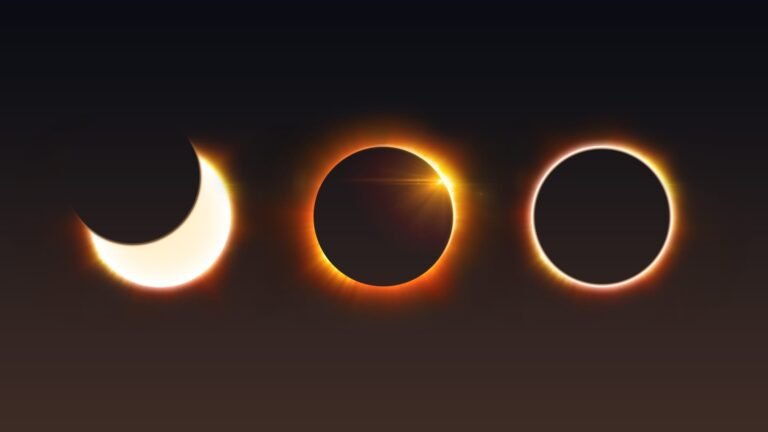
Solar eclipse (Photo/Newswire)
SHARE
Highlights
  • The Absence of Science and the Dominance of Supernatural Myths
  • The Defining Turning Point: “They Do Not Eclipse for the Death or Life of Anyone”

Makkah – Kingdom of Saudi Arabia — Throughout long human history, the phenomenon of a solar eclipse has consistently triggered states of fear, awe, and dread among ancient nations and civilizations. The pre-Islamic Arabs of the Arabian Peninsula were no exception to this rule; they perceived this rare, abrupt astronomical event through the lens of their unique tribal folklore, anchoring the movements of celestial bodies to supernatural forces and monumental human transitions. This persisted until the dawn of Islam, which introduced a corrective framework based on understanding cosmic events as intrinsic, divine signs operating within a structured universe.

The Absence of Science and the Dominance of Supernatural Myths

In pre-Islamic Arabian society, there was a stark, pervasive absence of precise scientific or mathematical knowledge regarding planetary mechanics and orbital physics. Consequently, it was entirely normative for unusual astronomical phenomena to be bound to diverse folk interpretations and communal myths. For many nomadic tribes, a solar eclipse was viewed as a direct, ominous portent, a harbinger of catastrophic events, an absolute sign of the death of a prominent leader or a person of high social standing, or even the physical manifestation of wrath from supernatural entities. This anthropological anxiety was a shared characteristic across various ancient civilizations worldwide.

Authentic historical records indicate that despite these baseline assumptions, ancient Arabs dedicated substantial attention to mapping the night sky, observing stellar alignments, and tracking planetary paths. This diligence was driven by the practical, vital requirements of desert navigation, trade expeditions, and forecasting agricultural and seasonal cycles. Nonetheless, their conceptual explanations for these abrupt, exceptional cosmic shifts remained captive to and heavily influenced by the mythological lore and oral traditions circulated at the time.

The Defining Turning Point: “They Do Not Eclipse for the Death or Life of Anyone”

With the historical advent of Islam, the theological and intellectual perception of the solar eclipse underwent a radical, foundational shift. In the tenth year of the Hijra, a highly publicized solar eclipse coincided precisely with the death of Ibrahim, the infant son of the Prophet Muhammad (PBUH). Mirroring old cultural habits, members of the Madinah community immediately concluded that the sun had veiled its light out of deep sorrow for the Prophet’s loss. However, the Prophet Muhammad (PBUH) swiftly and completely rejected this superstitious correlation, delivering a historic sermon clarifying that the sun and the moon are merely two signs among the signs of God, and they do not eclipse for the death or life of any human being.

This decisive prophetic directive established a revolutionary cognitive blueprint based on the complete separation between objective cosmic phenomena and subjective human or political fates—a transition that marked a major intellectual milestone in how society perceived the universe. Concurrently, the “Eclipse Prayer” (Salat al-Kusuf) was legislated as a communal, ritualistic act of worship to seek closeness to God during such events, explicitly detached from ancient fables or mythological baggage.

With the subsequent scientific golden age and the rapid evolution of mathematical astronomy within Islamic civilization, Muslim astronomers successfully analyzed the precise trajectories of the sun, moon, and earth. They engineered advanced astronomical tables and charts (Zij) that allowed them to predict the exact dates and durations of solar and lunar eclipses long before their occurrence. This scientific momentum effectively replaced ancient folklore with a rigorous methodology grounded in empirical observation and mathematical computation.

Today, contemporary scientists define a solar eclipse as a natural astronomical event that unfolds when the moon passes directly between the earth and the sun, temporarily blocking its light either totally or partially across specific geographic coordinates. Although this alignment is now comprehensively understood down to its exact physical mechanics, it continues to command an immense visual allure that drives millions worldwide to observe it. Ultimately, the evolution of how pre-Islamic Arabs viewed the eclipse stands as a living testament to the trajectory of human consciousness—advancing from the cloak of mythology into the objective horizons of science and faith.


TAGGED:Arabs of the pre-Islamic eraIslamic civilizationSolar eclipseVoice Of Emirates
SOURCES:Voice Of EmiratesNewswire
Share This Article
Facebook Whatsapp Whatsapp LinkedIn Telegram Threads Email Copy Link Print
Previous Article From Behind Bars to the Pages of Literature: A Tumultuous Life that Forged the Legend of Marquis de Sade
Next Article Preemptive Steps Ahead of the Developers Conference: Apple Unveils New Services and Features for Users
30°C
Dubai
clear sky
30° _ 30°
69%
6 km/h
Wed
38 °C
Thu
41 °C
Fri
33 °C
Sat
34 °C
Sun
35 °C

Editor's Pick

Tesla Faces Internal Criticism Over Autonomous Driving Systems Amid Safety Concerns

Rift in Development Division Over System Readiness: Engineers Warn of Performance Flaws in Complex Environments and Bad Weather as Regulatory…

By
Medhat Elsheikh
4 Min Read
Controversy in Silicon Valley: Apple Under Congressional Scrutiny for Closing Its First Unionized Store in the US

Labor Rights vs. Operational Strategies: Legislative Momentum Demands Clarifications from the Tech…

5 Min Read
Rocket Explosion Leaves Massive Losses.. NASA Assesses Damages and Long-Term Recovery Plans

Launchpad Infrastructure Under Engineering Scrutiny: Extensive Investigation Underway to Determine "New Glenn"…

5 Min Read

Trending

Preemptive Steps Ahead of the Developers Conference: Apple Unveils New Services and Features for Users

Setting the Stage for WWDC 2026: The Cupertino Giant Fortifies…

53 minutes ago

From Behind Bars to the Pages of Literature: A Tumultuous Life that Forged the Legend of Marquis de Sade

Forced Isolation as a Laboratory for…

1 hour ago

Narrative as the Gateway to Memory: Female Authors at the Warsaw Book Fair Discuss Tales of History and Place

Literature as a Tool to Confront…

1 hour ago

A Multimillion-Dollar Banana Sparks a Legal Crisis.. A French Museum Pursues Owners of the Famous Artwork

Intellectual Property of Conceptual Art Under…

2 hours ago

The Historiography of the Italian Throne: The “May King” and the Great Constitutional Transition

An Analytical Review of the Structural…

2 hours ago

You may also be interested in

Lifestyle

A King Without a Throne.. How the Life of Italy’s Last Monarch Ended on Egyptian Soil

Alexandria – Egypt — The ultimate fate of King Umberto II, the last reigning monarch of Italy, represents one of…

4 Min Read
LifestyleNews

From an Obscure Poet to a Nobel Laureate.. What Did the Swedish Academy Say About Karl Gjellerup?

Stockholm – Sweden — The Danish author and poet Karl Gjellerup stands out as one of the most prominent and…

5 Min Read
Lifestyle

The Fall of Crimea: How Russia Solidified Its Grip on the Black Sea Gateway

Moscow – Russia — The Crimean Peninsula stands out as one of the most geopolitically critical and volatile regions in…

4 Min Read
NewsWorld

Rubio: We Want Iraq’s New PM to Address Our Concerns Regarding Iran-Linked Militias

Washington – United States — US Secretary of State Marco Rubio has announced that the United States firmly expects Iraq’s…

2 Min Read
Top Header VOE Logo Header Dark Mode VOE Logo
  • About Us
  • Contact us
  • Advertise with us
  • Privacy Policy
Reading: When the Sky Darkened.. How Did Pre-Islamic Arabs Interpret the Solar Eclipse?
Share
  • Publishing Principles
  • Ethics Policy
  • Corrections Policy
  • Diversity Policy
  • Actionable Feedback Policy
  • Ownership & Funding
  • Privacy Policy
Reading: When the Sky Darkened.. How Did Pre-Islamic Arabs Interpret the Solar Eclipse?
Share

All rights reserved © Voice Of Emirates – a news service from Our Media Group

Welcome Back!

Sign in to your account

Username or Email Address
Password

Lost your password?