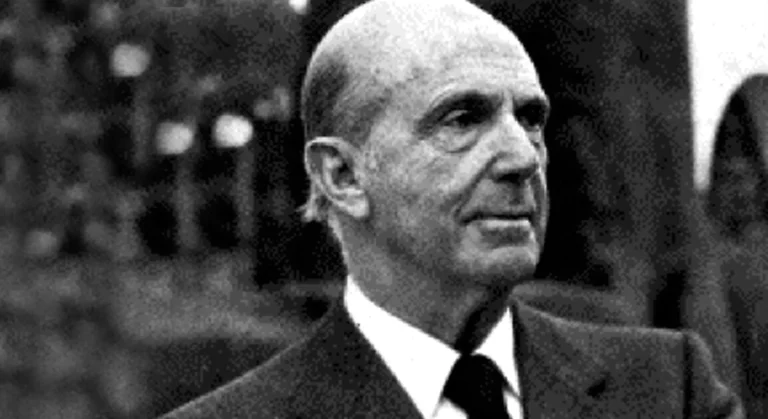
Alexandria – Egypt — The ultimate fate of King Umberto II, the last reigning monarch of Italy, represents one of the most dramatic and poignant chapters in modern European history. In a sweeping political shift, the Italian sovereign transitioned from occupying the throne of one of Europe’s most historic kingdoms to a quiet, displaced life in exile—a journey whose final acts unfolded on the soil of Egypt, far removed from the borders of the homeland he briefly ruled before the total abolition of the monarchy and the declaration of the Italian Republic.
The Final Abdication and the Desperate Bid to Salvage the Throne
Umberto II officially ascended the throne in May 1946 following the strategic abdication of his father, King Victor Emmanuel III. This high-stakes institutional maneuver was executed at a critical juncture in an eleventh-hour attempt to salvage the prestige of the Italian crown, which had faced severe domestic and political condemnation due to its long association and collaboration with Benito Mussolini’s fascist regime during the devastating years of World War II. However, this royal baseline materialized too late, as Italian public opinion had already shifted resolutely toward institutional structural change.
Mere weeks after his coronation, Italy conducted a historical, binding referendum in June 1946 to determine the future framework of its governance. The official returns yielded a decisive victory for the republican option, abruptly terminating the decades-long Italian monarchy and cementing Umberto II as the country’s final king. Following the declaration of the results, the deposed monarch left Italy under political duress for a lifetime of exile, while the new republican authorities passed strict constitutional bans legally prohibiting male descendants of the royal house from setting foot in Italy for generations.
Alexandria: The Final Destination for the “May King”
From that turning point onward, Umberto II lived a tranquil existence thoroughly detached from active political networks, moving across several European nations before settling for long durations beyond his native land. In his twilight years, Umberto II selected Egypt as a principal geographic anchor, residing for a notable duration in the Mediterranean city of Alexandria. At the time, Alexandria operated as a cosmopolitan haven and a historical home to sizable European communities, while serving as a sanctuary for displaced political figures navigating the territorial shifts of the 20th century.
As the former monarch advanced in age, his clinical health status gradually declined until his death in March 1983 at the age of 78. Though his passing occurred far from the palaces of Rome, the news of his death immediately revived the memory of a defining, volatile era of modern Italian history, during which the nation transformed from an empire to a republic post-WWII.
In Italian historiography, Umberto II remains permanently designated by the moniker the “May King,” a direct mathematical nod to the brief nature of his reign, which spanned only a few weeks—marking it as one of the shortest tenures in modern European history. Nonetheless, his name remains fundamentally linked to the constitutional transition that re-engineered the Italian state. The trajectory of Italy’s last monarch endures as a striking example of the massive systemic shifts that swept Europe in the 20th century, where wars and societal realignments collapsed historic thrones, steering sovereign kings and princes into distant geographies.