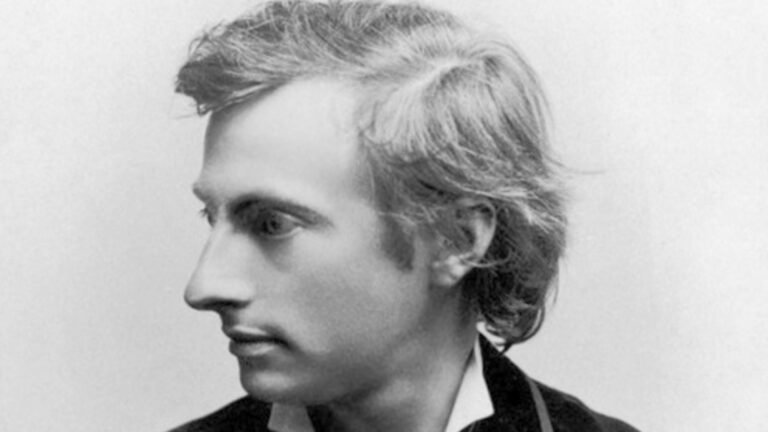
Stockholm – Sweden — The Danish author and poet Karl Gjellerup stands out as one of the most prominent and influential figures in Scandinavian literature during the late 19th and early 20th centuries. His prolific creative journey culminated in winning the world’s highest literary honor—the Nobel Prize in Literature in 1917. He shared this prize equally with his compatriot, the Danish writer Henrik Pontoppidan. This was in recognition of his unique literary contributions that masterfully combined profound intellectual depth with rich creative imagination.
From Theology to the Philosophy of Nietzsche and Eastern Thought
Gjellerup was born in 1857 in Denmark. He began his academic life studying theology in his youth before being completely captivated by the worlds of literature and philosophy. As a result, he shifted his focus entirely toward them. Throughout his intellectual journey, the late author was heavily influenced by several prominent European intellectual and philosophical movements. Chief among them were German philosophy and the theories of the famous philosopher Friedrich Nietzsche. His deep interest in authentic Eastern thought and profound spiritualism was clearly reflected in the structure of many of his later literary works. These works focused essentially on dissecting human issues, the continuous search for truth, and exploring the meaning of existence.
In the historic presentation speech, the Swedish Academy praised Gjellerup’s output extensively, describing his works as characterized by “high idealism and diverse literary creativity.” The Academy emphasized that his writings succeeded with stunning brilliance in blending deep philosophical contemplation with outstanding narrative and storytelling capabilities. In addition, it noted that his vast literary production provided the global library with highly profound human models. These works clearly reflected the psychological and social conflicts an individual faces with society on one hand, and with monumental existential questions on the other.
Global Acclaim via “The Pilgrim Kamanita” and Bridges of Buddhist Philosophy
The official presentation speech issued from Stockholm indicated that Gjellerup was not merely a transient novelist or a poet following traditional patterns. Instead, he was an intellectual and a philosopher shaped in a literary mold. He used the written word as a vital tool to explore sublime spiritual and moral values. This structural excellence granted his works a global character that crossed continents. Additionally, it helped his works transcend the borders of his homeland in Denmark and the entirety of Northern Europe.
Among his most prominent and famous creative masterpieces that shaped his international renown is the novel “The Pilgrim Kamanita,” classified as one of his most widely circulated and popular works. In this text, he drew inspiration from the warm, spiritual atmosphere of Buddhist philosophy and utilized it to discuss complex issues of spiritual salvation. He also enriched the Scandinavian library with numerous novels, plays, and poems. These works received wide and intense critical attention from the leading critics of his era.
Although the luster of Gjellerup’s fame declined relatively in subsequent decades compared to some of his contemporaries or other Nobel laureates, his name remains permanently etched in gold letters and strongly present in the annals of world literature. He is remembered as one of the pioneer authors who dedicated their pens to building a solid cognitive bridge between dry philosophical thought and living, human-centric literary creativity. Notably, his historic victory in 1917 remains a living testament to the high status he enjoyed in European cultural circles. It also shows the Swedish Academy’s insightful appreciation of his works, which combined humanism and deep intellectual exploration in a rare synthesis. This ensures his experience remains an inspiring and vital milestone in the history of Danish and world literature.