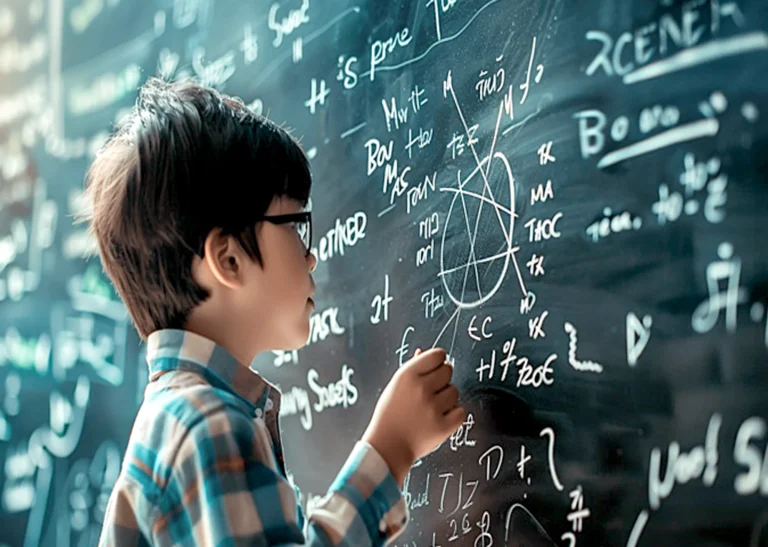
London, UK – Math and number enthusiasts around the world celebrate Number Day, a scientific event that highlights the importance of numbers in various aspects of life.
These include education, science, technology, and economics. Interestingly, this day isn’t celebrated just once;
it occurs five times a year, depending on the different ways dates are written around the world.
The reason for celebrating Number Day
Number Day is associated with dates where the day, month, and year all match,
such as 7/7/27 or 8/8/28. This gives the occasion a symbolic character that appeals to those interested in mathematics.
It also makes it an opportunity to organize educational events
and recreational activities that foster a love of numbers in children and young people.
The reason this occasion is celebrated five times a year is due to the different calendar systems used in different countries.
Some countries use the day/month/year order, while others use the month/day/year order.
In addition, there are other dates where numbers repeat in a distinctive way.
Therefore, this creates several occasions that can be considered “Number Days.”
A message to encourage new generations
Schools, universities, and educational institutions take advantage of
this occasion to launch mental arithmetic and mathematical puzzle competitions.
They also organize workshops and interactive activities aimed at developing logical thinking and problem-solving skills.
Furthermore, they strive to highlight the importance of mathematics in everyday life.
Educational experts emphasize that celebrating Number Day is not merely for entertainment;
it carries a scientific message that seeks to encourage new generations to take an interest in mathematics.
They consider mathematics the foundation of many modern disciplines,
such as artificial intelligence, engineering, programming, economics, and medicine.
Social media platforms also witness widespread interaction during this occasion,
as users share puzzles, numerical challenges, and interesting facts about the world of numbers.
This exchange is widespread, aiming to make mathematics more enjoyable and accessible to everyone.