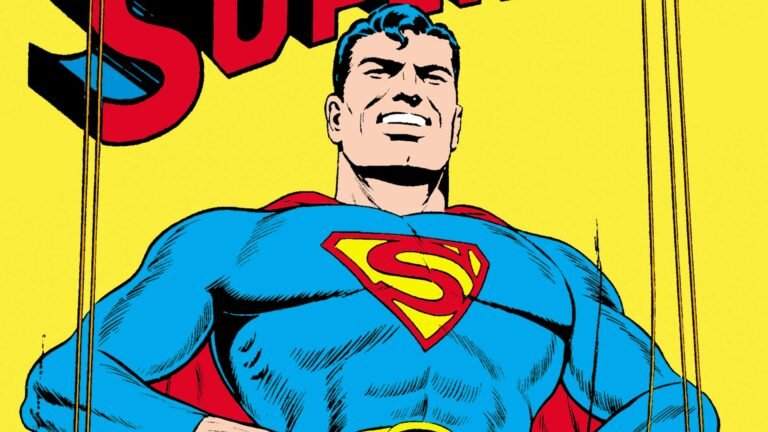
New York – United States — The comic book universe is celebrating a monumental milestone, marking 87 full years since the historical debut of “Superman”—the very first modern superhero in the history of graphic mediums. Since his inaugural appearance back in 1938, the American star transformed into an absolute global symbol of strength, justice, and optimism, effortlessly soaring past the structural boundaries of ink-and-paper pages to dominate cinema screens, television networks, and global popular culture frameworks.
The Birth of a Foundational Myth and the Bedrock of the Hero Industry
Superman made his initial landing in the historic debut issue of Action Comics in 1938. Crafted from the minds of writer Jerry Siegel and artist Joe Shuster, the creative duo introduced the character of “Clark Kent”—an extraterrestrial refugee hailing from the doomed planet Krypton who lives incognito among humanity, deploying his extraordinary physical capabilities to neutralize organized crime and fiercely shield the innocent.
Superman made his initial landing in the historic debut issue of Action Comics in 1938. Crafted from the minds of writer Jerry Siegel and artist Joe Shuster, the creative duo introduced the character of “Clark Kent”—an extraterrestrial refugee hailing from the doomed planet Krypton who lives incognito among humanity, deploying his extraordinary physical capabilities to neutralize organized crime and fiercely shield the innocent.
Transitioning to the Silver Screen and Mirroring Societal Transformations
As global cinematic technologies matured, Superman gracefully migrated to the silver screen through an epic live-action film lineage initiated in the late 1970s. Chief among these releases was the legendary 1978 film Superman, starring the incomparable Christopher Reeve, whose performance remains arguably the most emotionally resonant and structurally influential portrayal of the character in cinematic history. In later years, the character underwent multiple modern cinematic re-imaginings and television adaptations, alternating between classical retellings of his origin and darker, highly complex deconstructions of his psychology, directly mirroring shifting global consumer tastes and the macro-evolution of the international entertainment industry.
Despite the proliferation of diverse creative eras, artistic schools, and dramatic iterations, the baseline visual motif of Superman has remained completely unyielding: the legendary “S” shield emblazoned across his chest, the awe-inspiring capability of flight, and the core humanistic values representing justice, sanctuary, and self-sacrifice. These essential components have elevated him far beyond a simple fictional asset into a global cultural archetype. Pop culture sociologists emphasize that Superman is no longer merely a comic book character; he functions as a living historical mirror reflecting the socio-political movements of consecutive decades, adapting his narrative tone across various eras to align with shifting institutional concepts of power and identity within American and global societies. 87 years after his conceptual birth, Superman remains vibrantly etched in the collective human consciousness, validating that certain structural icons never age—they simply grow more foundational with the passage of time, forever flying beyond the parameters of temporal and spatial limits.