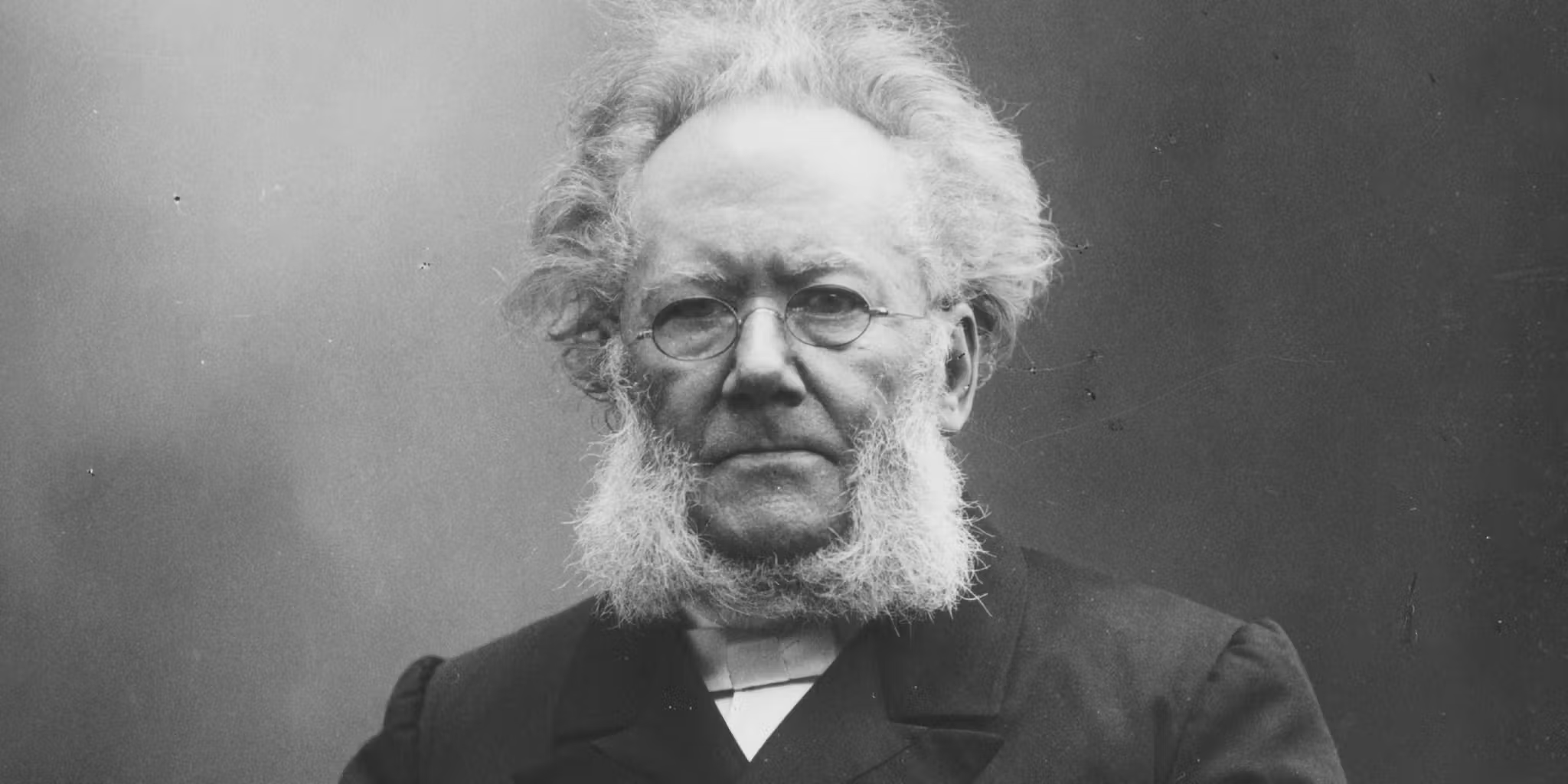
Oslo, Norway – Norwegian playwright Henrik Ibsen is rightfully hailed as the “father of modern theater.” He is also the spiritual architect of the realist drama that fundamentally transformed the history of global literature. Ibsen was not merely a traditional playwright; he was an intellectual and artistic revolutionary. He shifted theater from the confines of mere entertainment into a profound space for discussing human and societal issues with unprecedented realism. Furthermore, Ibsen serves as a testament to genius rising from adversity. His upbringing in volatile financial circumstances fueled his desire to explore the depths of the human psyche. He far surpasses the limitations of his modest early professional life as a pharmacy assistant in the city of Skien.
Humble Beginnings and an Unyielding Will to Immortality
Ibsen’s career journey began in a pharmacy, a profession that may have stifled his initial dreams but sharpened his senses to observe the secrets of the human soul. Consequently, he began writing his first texts, which carried the seeds of his philosophical vision. Although his literary beginnings did not achieve great success, Ibsen never ceased developing his unique style. From this perspective, he succeeded in turning the theatrical script into a “surgeon’s scalpel,” uncovering the hidden maladies of society. Moreover, his works were distinguished by an extraordinary ability to portray the eternal conflict between individual ambitions and the suffocating constraints of obsolete social institutions.
The “A Doll’s House” Revolution and Deconstructing Hypocrisy
On the other hand, the play “A Doll’s House” remains the icon of his works. It triggered a social and intellectual earthquake upon its release. The play addressed the issue of women’s independence and their role within the family with a boldness far ahead of its time. Similarly, other prominent plays such as “Ghosts,” “An Enemy of the People,” and “Hedda Gabler” possessed the power to deconstruct societal hypocrisy with rare brilliance. Consequently, through his genius, Ibsen transformed the theater into a platform for individual freedom and human rights. Ultimately, his theatrical characters became true mirrors of society. They are still studied and performed in the world’s finest theaters today.
Ibsen’s Influence Across Time and Language
Ultimately, literary critics affirm that Henrik Ibsen did not merely change the form of playwriting. He fundamentally changed how humanity perceives its own dilemmas. Based on this, his works continue to be translated into dozens of languages and remain a cornerstone for anyone seeking to understand the complexities of the human condition. Ibsen’s enduring presence as one of the most influential figures in the history of modern literature is no coincidence. It is the result of a piercing artistic vision that refused to accept anything less than stark truth. Consequently, Ibsen remains a shining star in the sky of creativity, reminding us that true art is that which confronts reality honestly and poses the most challenging questions.