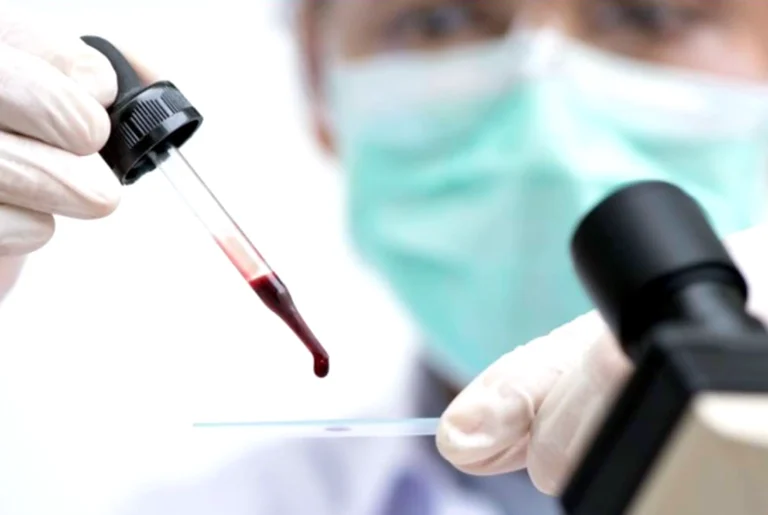
Washington, DC – A team of researchers has made a new scientific discovery revealing that the mechanism of red blood cell production in humans differs
from what has been believed for decades, based on studies conducted on mice.
This could pave the way for a deeper understanding of blood diseases
and the development of more precise treatments in the future.
Direct observation reveals a fundamental difference
Study team leader Dr. Ping Ji from Northwestern University Feinberg School of Medicine in Chicago said
that the new results contradict decades-old scientific assumptions.
Most previous knowledge was based on animal models, especially mice,
which do not accurately reflect what happens inside the human body.
The researchers used advanced microscopic techniques to directly observe
what are known as “islands of red cells” within the human bone marrow.
These are cell clusters that have long been thought to act as “incubators” in
which red blood cells mature before moving into the bloodstream.
Differences between humans and mice
Observations have shown that the organization and function of these islets in humans differ significantly from the pattern observed in mice.
This suggests that many hypotheses based on animal studies may need to be re-evaluated when applied to humans.
Researchers believe this new understanding could contribute to a better understanding of how blood disorders develop.
It may also help in designing more effective treatments targeting anemia
and bone marrow disorders, based on the specific biological characteristics of humans.
New horizons for medical research
The research team emphasized that the findings highlight the importance of studying human tissues
directly whenever possible, rather than relying solely on animal models.
This is particularly crucial for research related to hematopoiesis and bone marrow function.
The researchers noted that this discovery represents a significant step toward a more precise understanding of red blood cell production.
It could pave the way for future research aimed at improving the diagnosis and treatment of blood diseases.
This is achieved by leveraging advanced microscopic techniques that,
for the first time, have allowed for the observation of this vital process within human bone marrow.