
Exclusive, Voice of the Emirates – In an exclusive statement to Voice of the Emirates, political researcher Tariq Abu Zeinab affirmed that the UAE presence on the Lebanese scene cannot be classified as a fleeting move or a momentary reaction dictated by regional changes.
Rather, it is a “steadfast political positioning” that takes center stage at every critical historical juncture.
Furthermore, it reaffirms its commitment with every national challenge.
Abu Zeinab explained: “As a political researcher who follows the trajectories of international relations,
I believe that the UAE, since its founding, has never been an external observer of Lebanese events.
Instead, it is an active partner that contributes responsibly to reshaping national balances
whenever pressures intensify and challenges threatening Lebanon’s security and stability escalate.”
A relationship that transcends traditional support concepts
In analyzing the nature of this relationship, Abu Zeinab points out that it transcends traditional support frameworks or political seasons.
It is a cumulative path of humanitarian and political commitment that has never wavered.
While the Lebanese state is mired in cycles of collapse that perpetuate its crises,
the UAE remains a safe and stable haven for thousands of Lebanese who have found opportunities for a dignified life there.
This strengthens the social and economic ties that bind the two peoples.
In this context, Abu Zeinab believes that the UAE Ministry of Foreign Affairs’
decision to lift the travel ban to Lebanon represents a precise political signal.
It also reflects indicators of stability on the ground and paves the way for a return of confidence.
A decisive political vision that knows no gray area
The political analyst affirms that Emirati diplomacy does not employ ambiguity in its approach to the Lebanese issue.
The UAE explicitly welcomed the framework agreement between Lebanon and Israel, brokered by the United States,
emphasizing its full solidarity with the Lebanese state during this critical period.
Furthermore, it underscores its unwavering commitment to Lebanon’s sovereignty and territorial integrity.
Abu Zeinab adds: “The most important and profound message conveyed
by Abu Dhabi is its insistence on the state’s monopoly on the use of force,
considering it a fundamental and indispensable condition for establishing any genuine path to stability.”
Communication channels are open
For the UAE, there is no sovereignty without strong institutions.
Moreover, international confidence in Lebanon cannot be restored without the state regaining its central role.
This political presence was embodied in the important call made
by Sheikh Mohammed bin Zayed Al Nahyan to the Lebanese leadership.
This call affirmed the continued openness of communication channels,
while emphasizing the need to solidify the foundations of stability
at a critical regional juncture, when Beirut requires a clear umbrella of Arab support.
It also demonstrates that the UAE is not content with mere statements of
support but translates them into sustained and impactful political action.
Diplomacy as a humanitarian act on the ground
Regarding the Emirati model of humanitarian work, Abu Zeinab emphasizes
that policy in the Emirati school of thought does not remain confined to official pronouncements.
Rather, it quickly translates into direct, on-the-ground action.
Sheikh Mohammed bin Zayed Al Nahyan directed the Emirates
International Aid Agency to intervene immediately to provide relief to those affected.
This stemmed from a vision that humanitarian response is not a “result” of political stability, but rather a necessary “entry point” to it.
This humanitarian approach is a genuine extension of the legacy of Sheikh Zayed bin Sultan Al Nahyan – may God have mercy on him – who laid the foundation for this relationship in 1974.
At that time, he provided $150 million for the Litani River Project,
affirming that supporting Lebanon was supporting Arab rights and human brotherhood.
This approach continued after the civil war in 1990 through grants and loans for reconstruction.
Then, in 2001, came the $50 million demining project in southern Lebanon.
It also included a $300 million subscription to treasury bonds in 2003 as part of the “Paris II” conference.
Presence at the heart of crises
Researcher Tariq Abu Zeinab concludes his statement by emphasizing
that the UAE has always been at the heart of crises, acting as a proactive force, not a passive observer.
In 2020, when the COVID-19 pandemic gripped the world, the UAE took the initiative to send 12 tons of medical equipment.
It also established the Sheikh Mohammed bin Zayed Emirati-Lebanese Field Hospital.
Following the devastating Beirut port explosion, the UAE was
among the first countries to establish an air bridge for relief aid.
This demonstrated its swift moral and political response.
The UAE is with you, Lebanon
As tensions escalated, the UAE’s position became clear on September 30, 2024,
with Sheikh Mohammed bin Zayed directing the provision of $100 million in aid to Lebanon.
This included $30 million for Lebanese refugees in Syria.
The efforts did not stop at financial assistance; the “UAE is with you, Lebanon” campaign was launched.
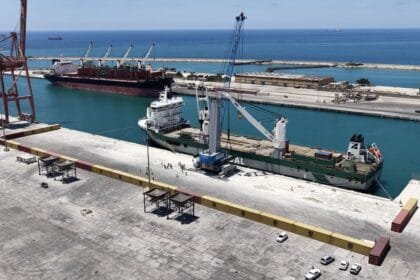
This culminated in the dispatch of 23 relief planes and two ships carrying 5,000 tons of urgent humanitarian aid.
Abu Zeinab concluded, “The UAE’s path is unwavering and consistent, continuing from the era of the founder to the current leadership,
affirming to the world that Lebanon will always remain at the heart of Emirati concerns,
and that Emirati support grows deeper and more steadfast with each crisis.”