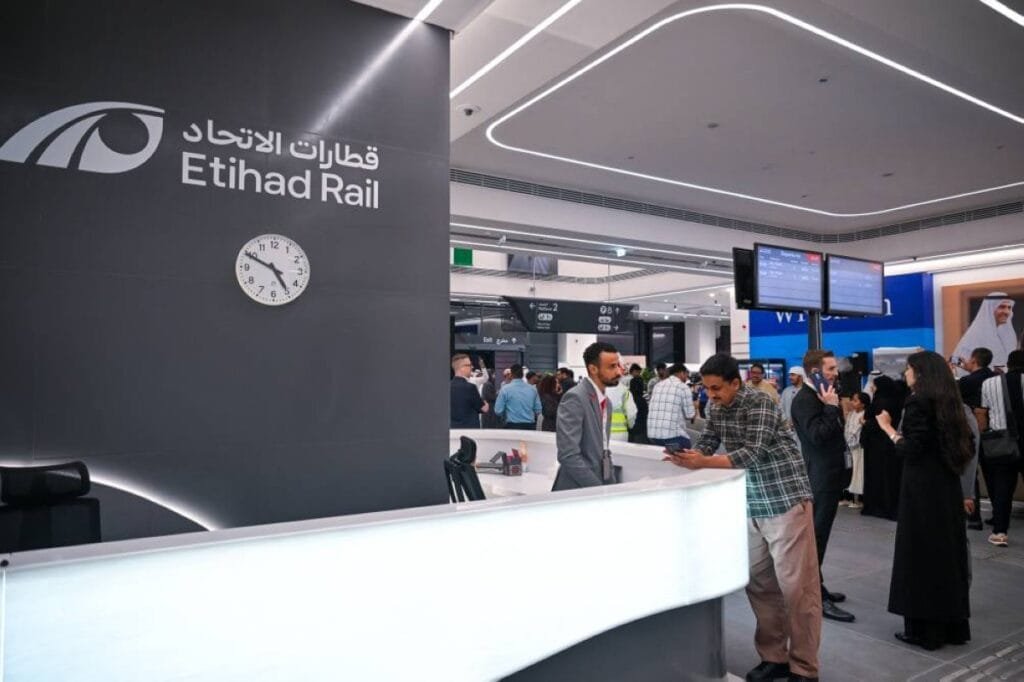
Abu Dhabi, UAE – The UAE has entered a new phase in the development of its transportation system. This marks the launch of the first passenger transportation services via the Etihad Rail network. It is a historic step that embodies the state’s vision to build an integrated and more sustainable transportation system. As a result, it enhances the quality of life and the cohesion of cities and communities.
This happened with the arrival of the first passenger train journey to Mohammed bin Zayed City Station in Abu Dhabi.
The train’s arrival was not just an ordinary journey between two stations. Rather, it was a pivotal station that reflects the result of years of planning and investment in a national project. This project is one of the most prominent projects of the fifty. Ultimately, it establishes a new era of smart mobility that combines speed, comfort and efficiency.
Shorten distance
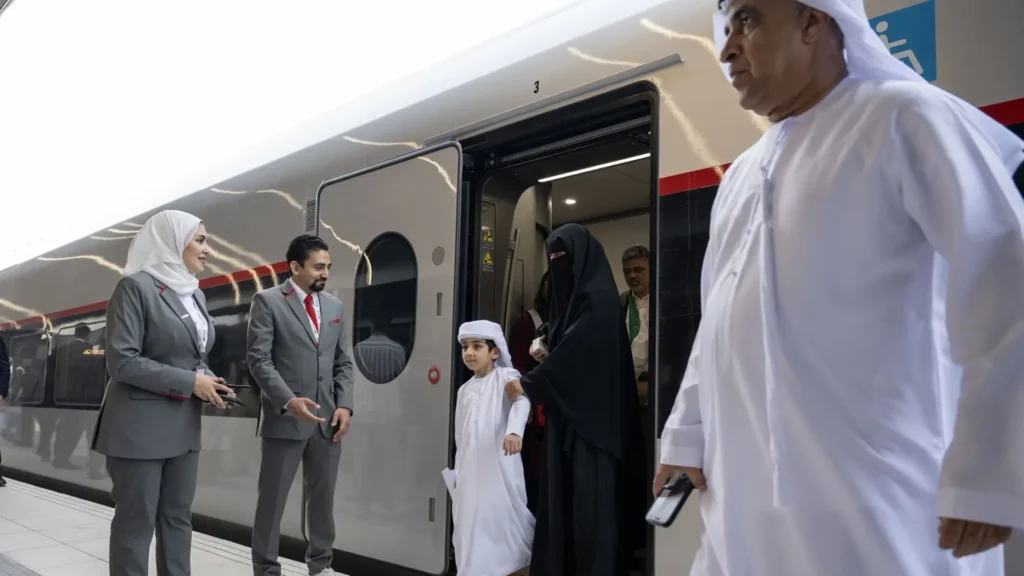
The first preliminary operational flights were launched between Abu Dhabi and Fujairah. This has shortened the distance between the two emirates to only about 105 minutes. Trains reach speeds of up to 200 kilometers per hour. This creates a modern travel experience that provides passengers with reserved and guaranteed seats. In addition, free Wi-Fi, charging ports, and comfortable luggage space make the trip itself part of the travel experience.
The operation of the passenger train comes less than five years after the UAE announced its vision to launch this service as part of the “50 projects”. This helps translate the state’s commitment to developing modern transportation solutions that support economic growth and enhance connectivity between the various emirates of the country.
Broad economic and social prospects
The project’s importance is not limited to facilitating mobility. Instead, it extends to broad economic and social horizons. Passenger train services are expected to generate economic and social benefits estimated at approximately 91 billion dirhams over the next fifty years. This will happen by increasing mobility efficiency, reducing congestion, lowering carbon emissions, supporting domestic tourism, and connecting economic and urban centers.
For their part, a number of passengers expressed their happiness at participating in the inaugural flight. They stressed that the project represents a historic milestone in the UAE’s transportation journey.
Etihad Trains currently allows tickets to be booked through its digital platforms. Initial prices for the Abu Dhabi – Fujairah route start from 55 dirhams in the comfortable class and 120 dirhams in the premium class. Thus, there are multiple options to suit travelers’ different needs in terms of flexibility and services.
An advanced national vision
The current operation represents the first phase of a phased expansion plan. Dubai and Al Dhaid will join the network on September 30, 2026. They will be followed by stations in the Al Dhafra region in December of the same year. Then, Sharjah will be added in March 2027. Eventually, this leads to a national network linking 11 cities and regions across the country.
When the network is fully operational, the expected passenger train fleet capacity will reach approximately 10 million passengers annually. Railways will become one of the most important pillars of the future transportation system in the UAE. It embodies a national vision that makes mobility a tributary to economic and social development and sustainability.