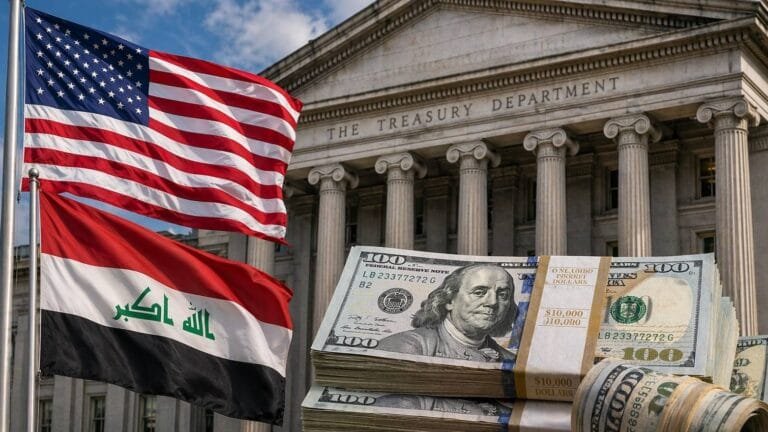
Baghdad, Iraq – In a move with significant political and economic implications, the United States has resumed airlifts of US dollars to Iraq after a months-long suspension. According to The New York Times on Thursday, citing aides to Iraqi Prime Minister Ali al-Zaidi, this decision represents a “goodwill” gesture from the US administration toward Baghdad. It comes in recognition of the Iraqi government’s efforts on sensitive issues.
Motives behind the decision: From arms control to regional de-escalation
This move comes at a sensitive time, as the region witnesses significant diplomatic activity. It is also seen as a reward for the policies pursued by Prime Minister al-Zaidi, particularly his serious efforts to consolidate weapons under state control. Observers noted that the declaration by some armed factions of their willingness to participate in disarmament operations has bolstered Washington’s confidence in the current government’s intentions.
Moreover, this initiative is linked to tangible progress in the ongoing negotiations between Tehran and Washington. Reports indicate that the move aligns with a memorandum of understanding. This memorandum included US pledges to gradually lift sanctions in exchange for Iranian commitments on key issues. These include the nuclear program and freedom of navigation in the Strait of Hormuz.
Executive aspect and official statements
Haider al-Aboudi, spokesman for the Iraqi Prime Minister, confirmed the resumption of dollar shipments, a claim echoed by Mazhar Muhammad Salih, the Prime Minister’s financial advisor. This issue had been strained last April when Washington halted a $500 million cash shipment. This coincided with the suspension of certain aspects of security cooperation and the imposition of sanctions on Iraqi banks accused of smuggling currency to Iran. Despite the resumption of dollar shipments, reports indicate that the suspension of cooperation and direct funding for Iraqi security forces remains in effect.
The repercussions of the decision on the Iraqi economy
This decision represents a significant boost to the Iraqi economy, which suffered from severe monetary and inflationary pressures during the period when transfers were suspended.
The influx of cash is expected to bolster foreign currency reserves at local banks. This will contribute to stabilizing the Iraqi dinar’s exchange rate and providing the necessary liquidity to meet import demand. It will also facilitate increased bank lending, thereby encouraging greater investment in the production and services sectors.
This will enable the government to finance infrastructure projects and public spending without resorting to harsh austerity measures, improve the climate for both domestic and foreign investment, and reduce reliance on informal financial channels that have been draining the economy. Overall, this step gives the Iraqi government greater flexibility in managing its financial obligations and mitigates the impact of exchange rate fluctuations on citizens’ purchasing power. This puts Baghdad on a more stable path to fulfilling its economic promises in the coming phase.