Tokyo, Japan – In a pivotal strategic move that reshapes the balance of power in the Indo-Pacific region, Japan has officially announced the induction of its Type 25 (25HGP) hypersonic glide vehicle into service with the Ground Self-Defense Forces.
This system represents the first domestically produced operational missile system to utilize boost-glide technology. It grants Tokyo an unprecedented capability to conduct long-range precision strikes.
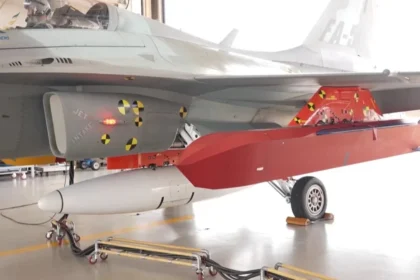
Official confirmation came via images published in the June 2026 issue of “ARMY Vol. 113.” This brought to a close years of development within Japan’s hypersonic glide vehicle (HVGP) program. It also marked a significant shift in Japanese defense doctrine towards the adoption of stand-off weapons.
Advanced technology: When maneuvering becomes a weapon
The missile combines extended range with exceptional maneuverability, relying on a solid-fuel booster to launch a glide vehicle that separates and travels at hypersonic speeds.
The system’s greatest advantage is the vehicle’s ability to continuously adjust its trajectory during flight. This makes predicting its path virtually impossible for conventional air and missile defense systems and significantly increases the difficulty of intercepting it.
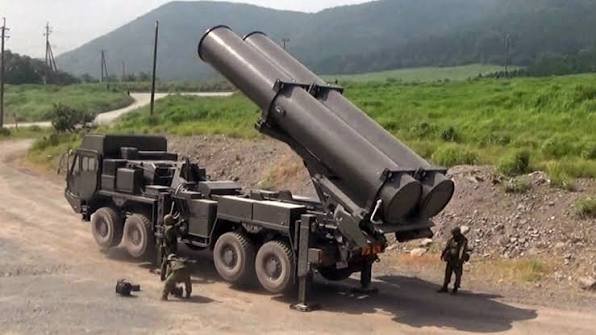
The multi-axle Heavy Launcher (TEL) platform is designed to ensure the continued presence of troops on the battlefield; these platforms enable rapid deployment, firing, and repositioning. This supports Japan’s strategy of distributing launchers across the national road network, particularly in the sensitive southwestern islands.
Specialized warheads: precision targeting and destructive power
The Type 25’s effectiveness is not limited to speed; it extends to a variety of combat missions through two advanced warhead concepts. The missile is equipped with an armor-piercing warhead designed to attack large surface objects from above, exploiting the weak protection on the upper surfaces of aircraft carriers and destroyers. This enhances its destructive effect through kinetic energy before detonation.
A high-density armor-piercing projectile (EFP) warhead is used to target high-value assets, such as command and control centers, air defense batteries, ammunition depots, and fortified infrastructure.
Strategic shift: from “coastal defense” to “active deterrence”
The introduction of the Type 25 represents a radical shift in Japanese defense policy since the end of the Cold War. After decades of relying solely on coastal artillery and short-range missiles, Tokyo is now adopting a model that combines missile defense with the ability to target enemy military assets before they launch an attack.
The system is intended to play a pivotal role in protecting the Nansei Islands chain, capable of threatening any power attempting to establish naval or air dominance near Japanese territory. While the operational version (Block I), with a range of several hundred kilometers, was unveiled today, attention is now turning to the more advanced version (Block II), currently under development. Its range is expected to reach 2,000 kilometers, which will strategically expand Japan’s strike capabilities over the next decade.
Despite common comparisons to China’s DF-17 missile, Tokyo insists its system is specifically designed for territorial defense, anti-access/area denial (A2/AD), and counter-landing operations. This makes it a robust deterrent aimed at protecting Japanese sovereignty in an increasingly competitive regional security environment.