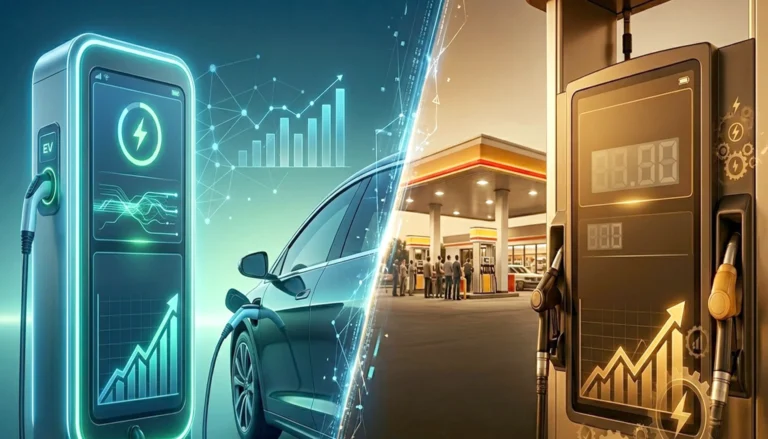
New York, USA – Goldman Sachs predicts that the accelerating adoption of electric cars globally will reduce oil demand in the coming years.
This prediction is particularly relevant given the changes in energy markets
following supply disruptions related to the closure of the Strait of Hormuz.
Scenarios for a decline in oil demand
The bank noted in a research note that global electric cars sales saw
a significant increase in May 2026, reaching a penetration rate of 26.1% of total sales.
This represents a 3.4 percentage point increase compared to previous periods, marking the second-highest level ever recorded.
According to the bank’s estimates, global oil demand could decline by approximately 130,000 barrels per day
by December 2027 if EV penetration rates remain at their current levels.
The bank described this as a “temporary acceleration” scenario.
However, if the strong growth in EV sales continues as trended between February and May 2026,
the projected decline in oil demand could reach approximately 320,000 barrels per day by the end of 2027.
This scenario, the bank termed a “continued acceleration” scenario, is now considered a significant increase.
Asian markets are leading the shift
Goldman Sachs explained that two-wheeled and three-wheeled electric cars play a key role in markets such as China, India,
and Vietnam, where they account for the largest share of electric vehicle sales.
The bank emphasized that this category of vehicles has the potential to significantly reduce conventional fuel consumption,
using between one-third and one-half of the fuel consumed by a single electric passenger car.
The report noted that 12 of the top 15 electric vehicle markets worldwide have seen increased adoption rates in recent months,
with China leading the way with an improvement of 11.4 percentage points.
The bank believes that continued growth could accelerate the global shift towards electric transportation,
which, in turn, will impact future oil demand and traditional energy markets in the coming years.