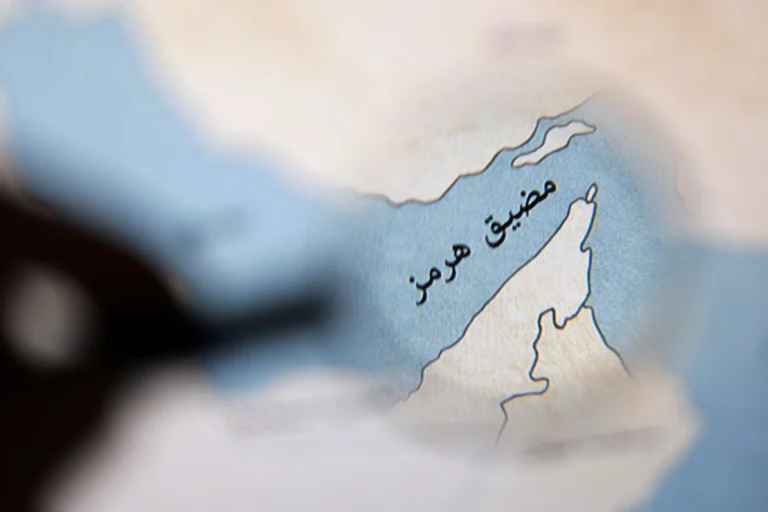
Baghdad, Iraq – In a shocking economic report released Saturday by the Eco Iraq Observatory, the Iraqi economy has suffered significant losses, amounting to approximately 350 million barrels of crude oil exports, since the closure of the Strait of Hormuz on February 28.
According to financial estimates, this lost quantity is equivalent to a loss of approximately $37.7 billion. This situation presents the country with serious financial challenges, given that the general budget relies on oil revenues for nearly 90% of its funding.
A sharp decline in monthly export rates
Before the crisis erupted and the vital strait was closed, Iraq maintained stable exports at rates ranging between 103 and 107 million barrels per month. With the escalation of military tensions in the region, Iraqi oil flows have witnessed a continuous decline. This has resulted in “lost export opportunities” accumulating over the past months, according to the following data:
March: Losses in exports amounted to about 84,395,049 barrels.
April: The decline continued, with losses reaching 93,115,870 barrels.
May: Exports recorded a further decrease of approximately 92,801,000 barrels.
June: As of the time of writing this report, exports have reached approximately 79,600,000 barrels.
This significant shortfall in exported production, estimated at 350 million barrels, resulted in a massive drain on the country’s financial resources. This was calculated based on the average global oil prices during that period.
The “New Levant” project: A strategic necessity for survival
Given the geopolitical risks surrounding maritime routes and directly impacting national energy security, the Eco-Iraq Observatory has called on the Iraqi government to take urgent and serious action to expedite the implementation of the “New Levant” project. According to the Observatory, this project is the optimal strategic option for securing alternative export outlets away from the Strait of Hormuz. Complete reliance on existing maritime routes has proven to be a strategic vulnerability that threatens the Iraqi economy. Therefore, the need to create vital land-based export routes has become critical to ensure the stability of revenue flows and to shield the country from the risks of regional instability. This instability could persist for extended periods, making a strategy of diversifying export outlets a top priority for ensuring Iraq’s future economic and financial stability.