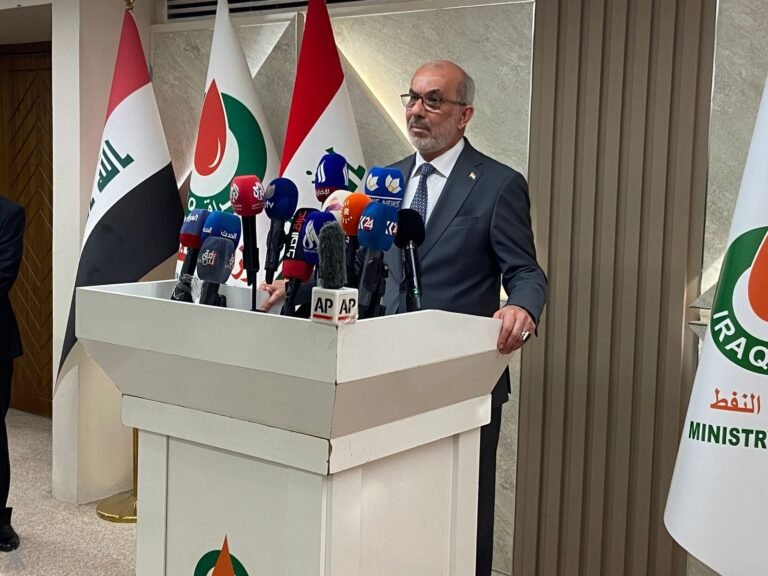
Baghdad, Iraq – Iraq’s new Oil Minister, Basim Mohammed, revealed at a press conference on Saturday a record-breaking and sharp decline in Iraqi oil exports through its southern seaports.
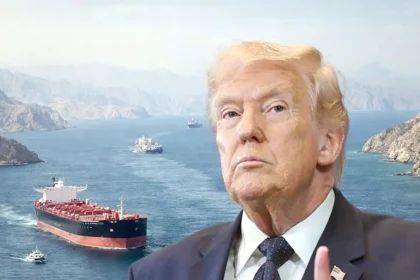
The minister explained that the country exported only 10 million barrels of crude oil during April via the strategic Strait of Hormuz. This represents a dramatic drop compared to normal export rates, which reached approximately 93 million barrels per month before the recent Iran-Iraq War. Military tensions in the region have also impacted these rates.
Crude oil exports from major producers in the region, including Saudi Arabia, the UAE, Kuwait, and Iraq, have been reduced due to partial closures and security disruptions in the Strait of Hormuz caused by armed conflict. This has sent shockwaves through global energy markets, leading to a sharp and record-breaking surge in global oil prices amid fears of supply shortages.
Kirkuk-Ceyhan alternative and production plan
Amid this maritime blockade, the oil minister noted that Iraq had successfully resumed crude exports by land via the Kirkuk-Ceyhan pipeline in March. This followed a joint financial and technical agreement between the federal government in Baghdad and the Kurdistan Regional Government, aimed at restoring the flow of oil.
Mohammed stated that Iraq is currently pumping approximately 200,000 barrels per day through the Turkish port of Ceyhan. He also confirmed that the ministry is urgently planning to increase this quantity to 500,000 barrels per day. This step aims to compensate for the shortfall resulting from the disruption of shipping lines in the Arabian Gulf.
Coordination with OPEC to increase production capacity
At the conclusion of the press conference, Minister Basim Mohammed emphasized that Iraq intends to continue close cooperation and joint coordination with the Organization of the Petroleum Exporting Countries (OPEC) and its allies. This aims to strengthen and develop its infrastructure and export and production capacities.
He added that Baghdad has developed an ambitious strategic plan targeting a total production capacity of 5 million barrels per day in the coming phase. This will ensure Iraq maintains its market share and secures revenues for the general budget.