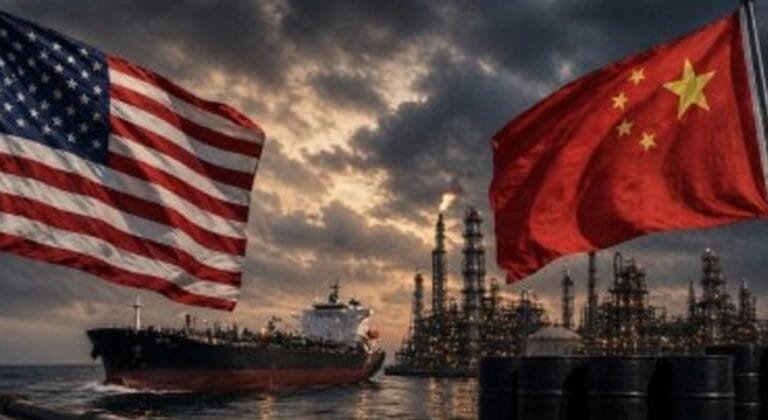
Beijing, China – In a move reflecting the complexities of the global financial landscape and Beijing’s cautious approach to US pressure, Bloomberg News reported that China’s financial regulator has issued a verbal advisory to the country’s largest banks and lenders, urging them to temporarily halt new lending to several independent oil refiners recently targeted by US sanctions.
Verbal instructions and banking caution
The agency quoted informed sources as saying that the National Financial Regulation Authority (NFRA) has asked major banks to refrain from providing new yuan-denominated credit facilities to five Chinese oil refineries.
These directives come after the US Treasury Department added these companies to its sanctions list. This was due to their involvement in facilitating the trade and transport of Iranian oil, which Washington considers a violation of international sanctions imposed on Tehran.
The report explained that the Chinese directives focused solely on “suspending new loans” and did not extend to “recalling existing credit.” This was done in an attempt to balance the situation and prevent the sudden collapse of these companies, while ensuring that the Chinese banking system did not become directly embroiled in secondary US sanctions. Such a confrontation could isolate Chinese banks from the dollar-based global financial system.
Implications for the independent refining sector
These refineries, known in oil circles as “teapots,” are a vital part of China’s energy sector. They rely heavily on crude oil imported at discounted prices from countries under sanctions, such as Iran, Russia, and Venezuela.
Experts indicate that restricting these refineries’ access to local currency (yuan) will severely impact their operations and their ability to finance future oil shipments.
Despite China’s continued criticism of unilateral US sanctions as illegal, this regulatory move reveals Beijing’s desire to protect its major financial institutions from the fallout of Operation Freedom or any new trade escalation with Washington.
These cautious financial diplomacy maneuvers reflect China’s attempt to maintain vital Iranian energy flows to its economy while simultaneously trying to avoid paying a heavy price that could affect its massive banking system.