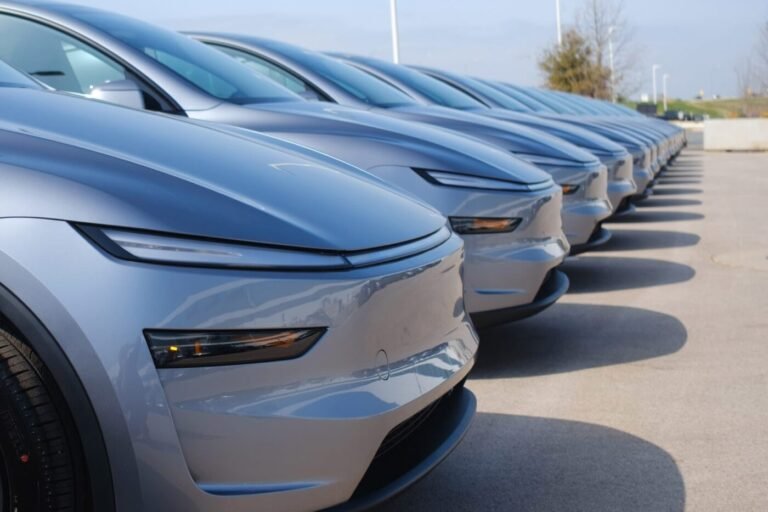
Tesla announced strong financial results for Q1 2026, achieving a 16% revenue growth to reach $22.39 billion, surpassing market expectations despite significant challenges. The company clarified that this positive financial performance was supported by a notable improvement in gross margin, which jumped to 21.1%, thanks to cost-control policies and increased returns from the services and software sectors. Accordingly, Tesla’s financial performance and growth outlook 2026 indicates the company’s ability to “absorb economic shocks,” shifting focus from just selling cars to providing integrated technological solutions.
AI and Subscriptions: How Did Tesla Compensate for the “Sales Gap”?
Although vehicle deliveries (358,023 units) fell short of analyst expectations, Tesla successfully compensated for this decline by diversifying its income sources. Obviously, the services and software sector—particularly Full Self-Driving (FSD) subscriptions, which reached 1.28 million active subscribers—played a decisive role in supporting profits. As a result, the results showed that the company is no longer betting solely on sales volume, but on the added value from technology and energy, despite a temporary dip in the energy storage segment, which recorded 8.8 GWh this quarter.
Robotaxi Ambitions: $25 Billion Investment to Shape the Future
Tesla confirmed it will continue pouring massive investments exceeding $25 billion during 2026 to develop AI infrastructure, Robotaxi projects, and next-generation vehicles. Certainly, this move aims to maintain the company’s leadership in the face of fierce Asian competition and global recessionary pressures. Accordingly, Tesla’s financial performance and growth outlook 2026 remains the primary bet for investors who view Elon Musk as the leader of a technology and software company, rather than just a traditional automaker.