
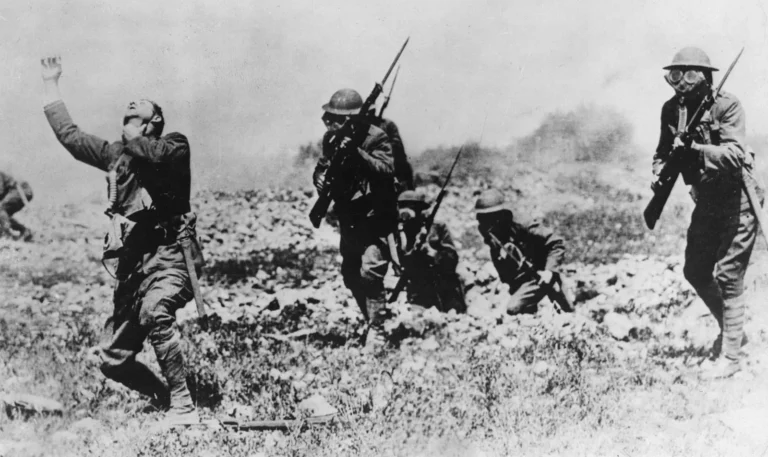
Mustard gas is considered one of the most heinous chemical weapons recorded in history during World War I, causing human suffering that did not end with the battles but persisted for years on the bodies of survivors. Accordingly, the history and effects of chemical weapons 2026 serves as a constant reminder of the brutality of conflicts, as this gas was not merely a tool for quick killing, but a means of inflicting painful injuries whose symptoms appear gradually, making the victim unaware of the catastrophe’s scale until it is too late.
Burns, Blisters, and Vision Loss: How Did “Mustard” Turn Battlefields into Hell?
Mustard gas causes the destruction of the skin, eyes, and respiratory system, leaving painful blisters and permanent lung damage. Obviously, the danger of this weapon lies in its long-term effects, with survivors suffering from chronic diseases and an increased risk of cancer. As a result, its first use in the European theater led to a global shock that later prompted the international community to draft international conventions banning chemical weapons, considering them a flagrant violation of all ethical and human lines in war.
Memory of Terror: A Century Later, the World Has Not Forgotten the “Burning Weapon”
Despite over 100 years since its use, mustard gas remains present in historical memory as one of the most terrifying weapons in human history. Certainly, evoking these tragedies aims to educate future generations about the destruction left by chemical warfare. Accordingly, the history and effects of chemical weapons 2026 remains an important reference confirming the necessity of adhering to international treaties to prevent the recurrence of these heinous crimes that target the destruction of humans and their bodies even after the cannons fall silent.