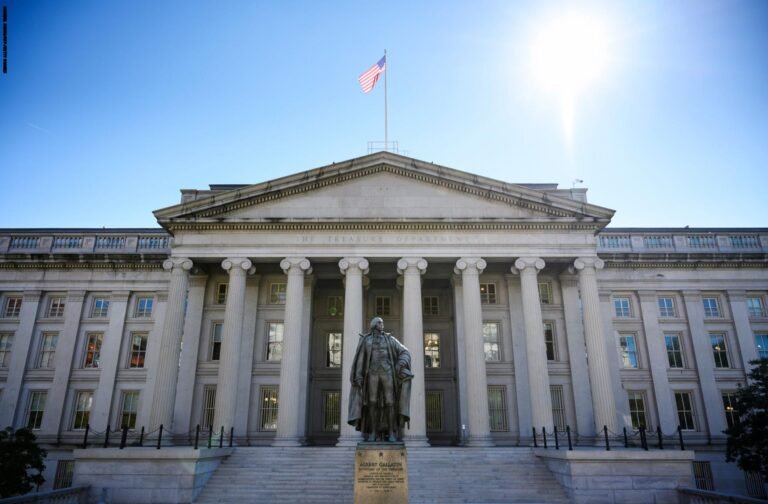
Washington – The US Department of the Treasury confirmed its determination to continue tightening the noose on Iran’s ability to generate and transfer funds, as part of an expanded strategy to increase economic pressure on Tehran. In an official statement, the Treasury clarified that current and future measures primarily target financial networks and entities relying on “circumvention” to bypass international sanctions. Accordingly, the intensification of financial sanctions on Iran 2026 marks a decisive phase in the economic conflict, as Washington seeks to close all channels used by Tehran to provide liquidity for financing its various activities.
Pursuing “Secret Channels”: How Does Washington Plan to Cut Off Tehran’s Supplies?
The Department emphasized that US actions will not be limited to domestic efforts but will include high-level international coordination to enhance oversight of cross-border financial flows. Obviously, the primary goal is to prevent any illicit channels used to transfer money away from international scrutiny. As a result, political circles expect these measures to lead to a sharp reduction in Iran’s purchasing and economic power, placing additional constraints on its regional movements amid the region’s volatile landscape.
The “Treasury” Weapon: Economics as a Tool to Reshape the Balance of Power
The US Treasury’s statements come in tandem with intensive political and military movements aimed at reshaping the balance of power in the Middle East. Certainly, Washington is betting on the “money weapon” as a primary pressure tool to force Tehran into backtracking. Accordingly, the intensification of financial sanctions on Iran 2026 remains the most prominent driver of current tensions, amid international anticipation of whether these sanctions can achieve a real “financial chokehold” that forces parties into new negotiation paths or face an imminent economic collapse.