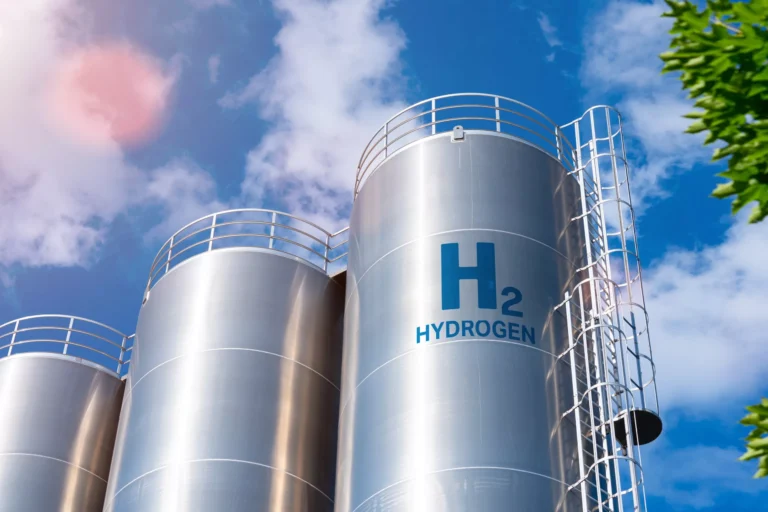
Agioi Theodoroi, Greece – Greece has taken a pivotal step towards a clean energy future, as the Avin Oil station in Agioi Theodoroi witnessed the refueling of the first race car belonging to the Toyota Gazoo Racing team with green hydrogen. The car, equipped with an internal combustion engine, participated in the famous Acropolis Rally, moving hydrogen technology in Greece from theoretical designs on paper to concrete application on the ground.
Beyond Symbolism: Building a Value Chain
The importance of this step does not lie only in the symbolic aspect of the race, but in representing the core challenge for a market that is still in its infancy: transitioning from isolated technological demonstrations to establishing a real market. This came during a conference organized by Motor Oil, the coordinator of the TRIERES project (the Greek Hydrogen Valley), which was selected as the European Hydrogen Valley for 2024. Currently, hydrogen is imported from Austria as a temporary solution, but a 50MW electrolyzer unit is being built within the Motor Oil refinery to be one of the first major industrial facilities for green hydrogen production in the country.
Industrial Innovation and Sustainability
The refinery site was chosen to establish the electrolyzer within a vision based on industrial synergy, where heat and oxygen resulting from the production process will be utilized in other industrial applications. The project also focuses on resource sustainability, as the production process relies on seawater desalination instead of depleting fresh water, a vital solution given the water pressures facing the region.
The Chicken and Egg Dilemma
The Avin Oil station, which cost 4 million euros, is considered the first tangible hydrogen infrastructure in Greece. However, the commercial exploitation of the station faces a classic dilemma: the absence of a sufficient fleet of hydrogen vehicles means a lack of demand, and the lack of demand limits companies’ enthusiasm to invest in expensive infrastructure. Experts emphasize that launching this market requires simultaneous progress in developing transport infrastructure and export corridors, the maturation of local demand from heavy industry, shipping, and road transport sectors, and bridging legal gaps through technical legislation and safety rules.
Hydrogen as an Energy Balancing Tool
Production cost, linked to renewable electricity prices, remains the biggest barrier. However, hydrogen emerges as an ideal tool to exploit surplus energy, where surplus production from sun and wind is converted into hydrogen molecules that can be used later in processes that are difficult to convert to direct electricity, such as energy-intensive industries. The Agioi Theodoroi experiment proves that Greece has already begun testing infrastructure. However, success remains dependent on the country’s ability to create a sustainable commercial model that integrates hydrogen into a multi-source energy system, away from optimistic expectations that assume an immediate magical solution to all energy challenges.