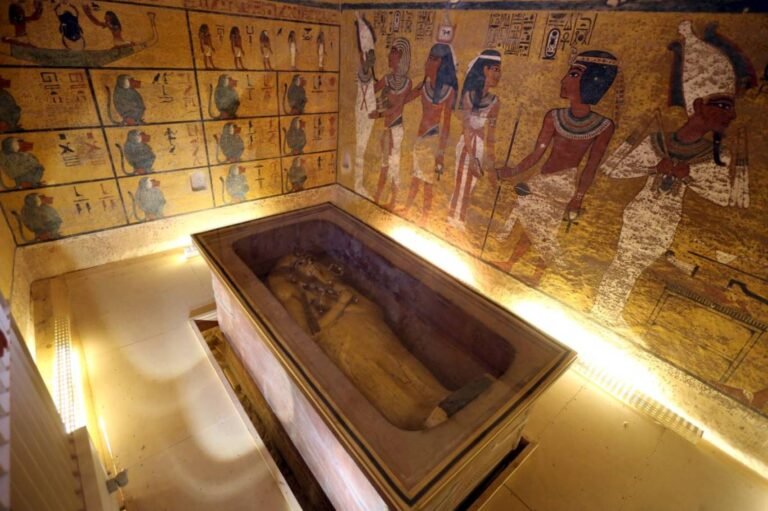
Cairo – A recent scientific study has revealed new data regarding the tomb of the young Pharaoh Tutankhamun, shedding light on one of the most mysterious periods in Ancient Egyptian history. The study indicates that the tomb’s design and internal structure carry “unconventional” evidence, suggesting it was not originally intended to be a full royal burial site. This reinforces hypotheses of the King’s sudden death, which forced authorities to use a ready-made or hastily modified tomb to suit the Pharaoh’s status, explaining its cramped space compared to other royal tombs.
Gods and Politics in Conflict: How Did Tomb Inscriptions Reveal the Post-Akhenaten Coup?
The study analyzed a group of inscriptions and symbols reflecting sharp political and religious changes during that era, particularly the struggle between followers of traditional religion and supporters of Akhenaten’s religious trends. Obviously, this data relates to the manner of power transfer following Tutankhamun’s death, as evidence points to rapid and perhaps unstable arrangements to ensure ruling continuity. As a result, the study noted that some artifacts were not specifically made for the young King but were reused, reflecting the political turmoil and exceptional circumstances surrounding the burial process.
Redefining History: The 1922 Tomb Still Reveals “Power Structure” Secrets in Ancient Egypt
Archaeologists believe these findings open the door for a comprehensive reassessment of Tutankhamun’s reign from a broader historical perspective regarding the power structure and shifts within the state. Despite over a century passing since its discovery in 1922, the tomb continues to reveal new secrets, proving that Egyptian history is not static but subject to rereading with every new discovery. Accordingly, the study proves that the past never ceases to surprise the present, and that the Pharaohs’ secrets still hold many truths yet to be fully uncovered.