Moscow, Russia – Military operations between Russia and Ukraine escalated in the early hours of Friday, August 14, 2026. These operations included Russian airstrikes targeting military and logistical infrastructure in Ukrainian cities. Simultaneously, a wave of intense drone attacks was exchanged, targeting vital facilities and strategic ports deep inside Russia. Furthermore, the security tensions have spread to the borders of the Baltic states.
Targeting Ismail Port and two military ships
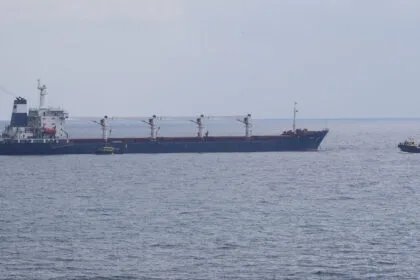
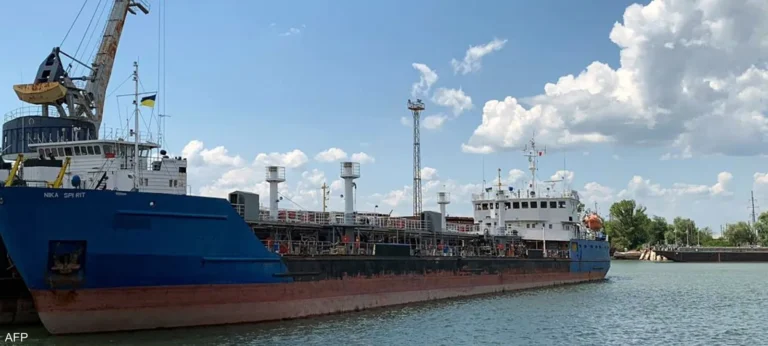
The Russian Ministry of Defense announced in an official statement that its armed forces had carried out precision airstrikes using drones. The attacks targeted the strategic port of Izmail. A railway station used by Ukrainian forces for unloading, storing, and transporting military supplies and fuel was also targeted. The ministry clarified that the attacks were not limited to the port alone. On Thursday evening, they also targeted two Ukrainian vessels that were escorting cargo ships carrying Western weapons. These ships were destined for Kyiv through the Black Sea, southwest of Mykolaiv. The statement also mentioned the bombing of another Ukrainian military logistics center in the Brovary district of the Kyiv region.
Fires at the port of Ust-Luga contained; widespread counter-protests.
Deep inside Russia, local authorities announced that the damage from a fire that broke out at the vital Baltic Sea port of Ust-Luga, following a nighttime attack by Ukrainian drones, had been contained. The port is one of Russia’s main oil export hubs. Local official Alexander Drozdenko confirmed that the situation was fully under control and that there were no casualties. Furthermore, Drozdenko added that air defenses shot down more than 50 drones overnight in the northern region surrounding St. Petersburg. This comes as Moscow responds to repeated attacks targeting oil refineries and ports. These attacks are aimed at increasing the cost of the war that has been ongoing since 2012. Moreover, these attacks have exacerbated fuel shortages in Russia.
Damage in Tver and escalating tensions towards the Baltic
In a related development concerning the overnight escalation, the governor of Russia’s Tver region, Vitaly Korolev, reported that debris from hostile drones damaged the wall of a warehouse belonging to the Wildberry Company, but no injuries were reported among the employees. The company’s facilities have been targeted by drone attacks more than 20 times in the past month.
Concurrently with these escalating developments on the ground, the Latvian armed forces announced that NATO fighter jets had shot down a foreign drone that had violated Latvian airspace. This heightened security situation prompted Finland to impose temporary restrictions on maritime traffic in parts of the Baltic Sea. They did so while anticipating the possibility of similar attacks. This clearly indicates a widening circle of security concerns extending to neighboring European countries.