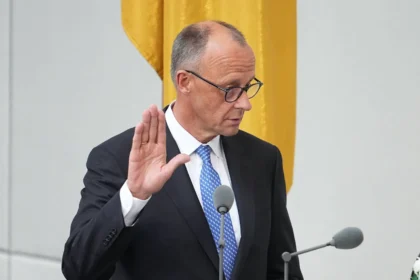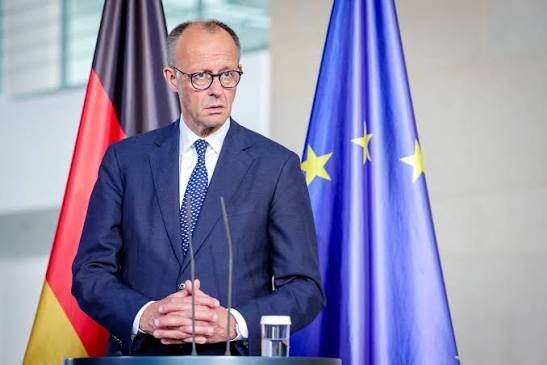
Berlin, Germany – German Chancellor Friedrich Merz hinted at the possibility of a reshuffle in the composition of the federal government. This came in the wake of the sudden resignation of Lins Spahn, head of the Christian Democratic Union parliamentary group, last Saturday. This resignation comes in the midst of widespread uproar sparked by news of young men giving birth to a child via a “surrogate mother” in the United States. It is noteworthy that this procedure is legally prohibited in Germany.
Accusations of “double standards”
This issue has put former Health Minister and prominent party leader Sebastian Schäuble in a difficult position, as he has faced accusations of double standards. This comes after the Christian Democratic Union, led by Meretz, reiterated its explicit opposition to surrogacy earlier this year.
In an interview with ZDF on Sunday, Merz confirmed that this incident “could be an opportunity to reconsider the composition of the federal government.” He clarified that he was presenting it as a “possibility,” not a firm plan. When asked about Spahn’s successor, particularly after the name of Thorsten Frei, Merz’s chief of staff, was mentioned, Merz declined to confirm any candidates for the position.
The party’s credibility has been damaged
For his part, Meretz expressed his dissatisfaction with the way Shaban dealt with the crisis. He indicated that the latter informed him of the matter 10 days ago and asked him to keep it secret. Meretz considered that informing the party came “too late,” which caused clear damage to the party’s credibility. This prompted him to ask Shabab to resign. Regarding his feeling of betrayal, Meretz refused to go into details publicly. He considered the file “finished,” and merely thanked Shaban for his efforts in reforming the ruling coalition.
Stay tuned for succession discussions
All eyes are now on the meetings of the Christian Democratic Union (CDU) leadership, expected to take place in the coming days, to decide on the succession to the parliamentary group leadership. These developments reveal the depth of the crisis facing Merz in maintaining the cohesion of his party. He is also striving to ensure that his leaders adhere to the party’s declared ethical and political principles. This is particularly evident on controversial issues that affect German public opinion.