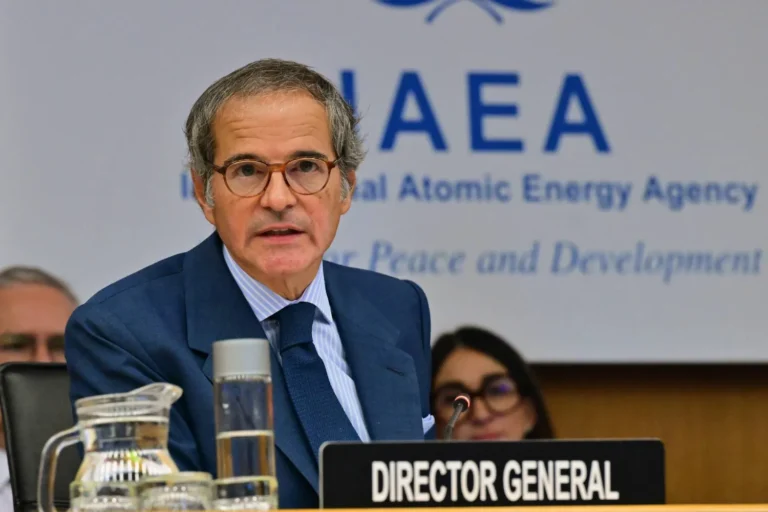
Vienna, Austria – The Director General of the International Atomic Energy Agency (IAEA), Rafael Grossi, said that Iranian officials informed the agency that Tehran would not resume cooperation unless there was progress in broader political negotiations with the United States. He deemed this linkage unacceptable. Speaking at a press conference on the sidelines of the IAEA Board of Governors meeting in Vienna, Grossi explained that communication between the agency and Tehran was at a standstill. He also confirmed that Iran was not providing the agency with the required information regarding its nuclear activities and facilities.
He emphasized that Iran remains a party to the Treaty on the Non-Proliferation of Nuclear Weapons. Therefore, its obligations under the treaty are not nullified by political circumstances or negotiations with Washington. The IAEA Board of Governors is holding its regular meeting in Vienna from September 7 to 11. This comes amid escalating tensions over international inspectors’ access to Iranian nuclear facilities.
Concern about uranium stockpiles
Grossi warned that the agency’s inability to access Iranian nuclear facilities damaged during the recent war raises “grave concerns” from a non-proliferation perspective. He said the agency currently lacks sufficient information on the status of uranium stockpiles at the affected sites and has been unable to conduct necessary verification. Prior to the attacks, the agency estimated that Iran possessed approximately 440 kilograms of uranium enriched to 60%, a high level approaching that used in producing weapons-grade material.
A call for “constructive cooperation”
Grossi called on Tehran to resume cooperation with the IAEA and fulfill its international obligations. He also stressed that a return to diplomacy and the resumption of negotiations are the necessary path to resolving the Iranian nuclear issue. His remarks come amid US and European efforts to refer the Iranian nuclear file back to the UN Security Council, based on what Western countries consider violations of non-proliferation commitments. In response, Iranian Foreign Ministry spokesman Esmail Baghaei described these efforts as “highly illogical” and indicative of bad faith. He then vowed to take the necessary measures should steps be taken to return the file to the Security Council.