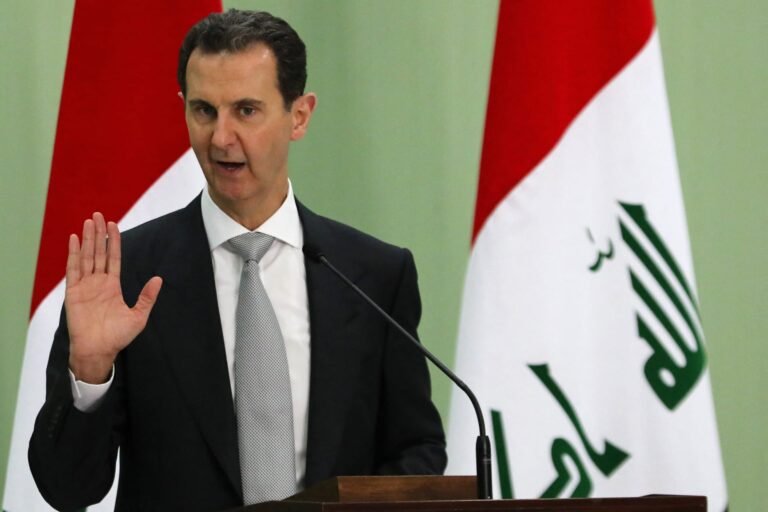
London, Britain – Media reports have revealed details of the final moments of former Syrian President Bashar al-Assad’s regime. They indicated that Moscow considered various scenarios to ensure its continued influence, most notably proposing Asma al-Assad as a potential successor to her husband in leading Syria.
The “Surprise Caliph” Plan
The British news outlet The Observer, citing sources close to the ruling family, reported that Russian circles began compiling a list of potential successors to Assad well before his regime’s collapse. Assad’s name emerged as an unconventional option. According to the sources, the Russians presented this idea to the former president, who was informed but dismissed it. In this context, one source stated that Assad “simply laughed” upon hearing the proposal.
Reports indicate that this Russian proposal was not a coincidence, but rather stemmed from the extensive influence the former first lady wielded, particularly in economic matters. Asma al-Assad exerted considerable control over vital sectors of the state, including international aid. She also headed an “economic council” aimed at directly influencing the country’s business sector and major corporations.
Historical and personal context
The emergence of Asma al-Assad’s name in this context is linked to her health condition at the time. She was receiving treatment in Moscow for acute myeloid leukemia, a diagnosis announced in 2024. Therefore, her presence in the Russian capital opens the door to speculation about security and political arrangements that may have been made during her treatment periods before the regime’s collapse in December 2025.
Asma al-Akhras was born on August 11, 1975, in London to Syrian parents. She grew up in a British environment and earned her university degree from King’s College London. Before her marriage, she worked in investment banking. She is known for her lifestyle, which blends Western modernity with her Syrian heritage.
Although the platform did not reveal further details about the seriousness of the Russian plan or whether it had progressed beyond the initial stages, these leaks highlight the depth of the crisis the regime was experiencing in its final days. They also underscore the Russian ally’s attempts to find a way out that would preserve its strategic interests in Syria, amidst the accelerating collapse of governing institutions in Damascus before their ultimate fall.