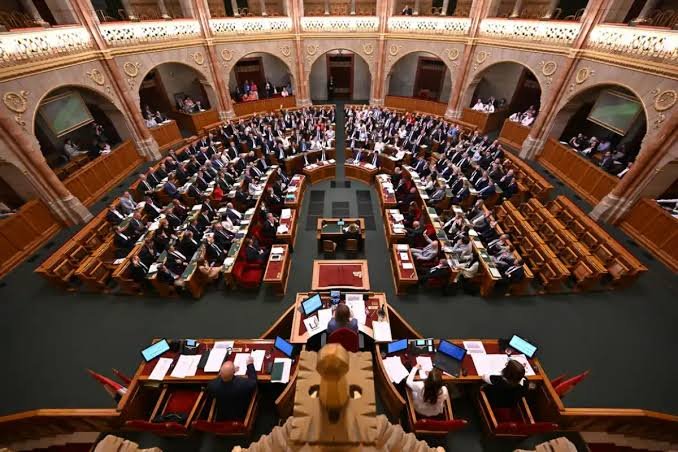
Budapest, Hungary – In a politically charged move that sparked widespread controversy, the Hungarian parliament on Monday passed a sweeping constitutional amendment that would immediately end President Tamás Sólyok’s term. The legislative body passed the 17th amendment by a vote of 139 to 6. The vote was met with a boycott by opposition forces, who described the event as “a day of mourning for democracy.”
Implications of the constitutional amendment
The new amendment gives President Solok five days to sign and enact the law. In response, Prime Minister Peter Magyar threatened to initiate immediate impeachment proceedings if the president refused to comply. The amendments extend beyond the presidency to the judiciary. The law establishes a mandatory retirement age of 70 for constitutional judges. According to the law, this would end the terms of Constitutional Court President Peter Bolt and three other judges. The law also lays the constitutional groundwork for the creation of a new “Office for the Recovery and Protection of State Assets.”
Political conflict and sharp divisions
This move faced fierce opposition from the Fidesz and Christian Democratic parties. In response, opposition MPs boycotted the session and laid wreaths at the grave of Joseph Antwol, the first democratically elected prime minister after the fall of communism. The opposition criticized the amendments as a violation of the institutional checks and balances upon which the country was founded in 1989. They viewed the new Asset Recovery Office as a political tool of intimidation.
Former Prime Minister Viktor Orbán condemned the amendments on social media, calling them “acts of tyranny.” He declared his party’s right to political “resistance.”
Internal restructuring
On another front, the amendment imposed a 12-year term limit (three terms) for parliament. This forced Giorgi Golias to resign as head of the Fidesz parliamentary group. This restriction will prevent approximately two-thirds of the current coalition’s deputies from running in the next elections.
Golias confirmed that his resignation was intended to pave the way for a new leadership capable of remaining in parliament beyond 2030. This move reflects the ruling party’s attempts to inject new blood and adapt its structures to the new constitutional situation.