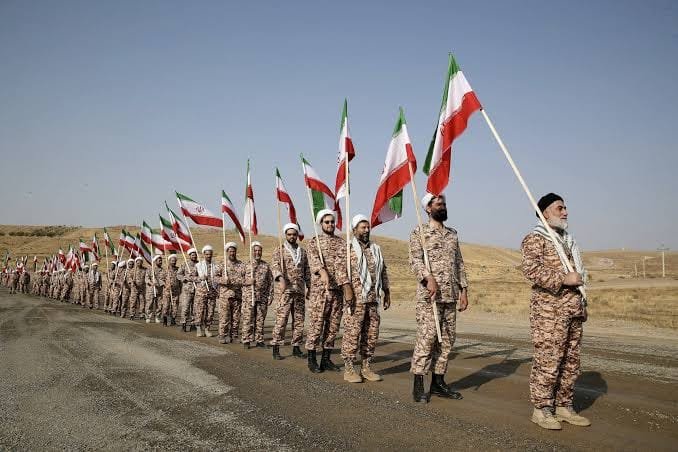
London, UK – In a historic shift in UK foreign and security policy, the British government announced on Monday, July 13, 2026, that it has designated Iran’s Islamic Revolutionary Guard Corps (IRGC) a terrorist organization. This comes as part of a package of stringent legal measures targeting threats supported by foreign states.
Decision under pressure
This decision comes in response to months of parliamentary and public pressure. Prime Minister Keir Starmer invoked new powers passed last month that allow the government to designate state-backed groups as terrorist organizations. Home Secretary Shabana Mahmood confirmed in her address to Parliament that the government had detected activities linked to the Iranian Revolutionary Guard Corps, including direct threats to life and acts of intimidation carried out on British soil.
Strict legal regulations
Under the new legislation, the Islamic Revolutionary Guard Corps is no longer the only entity on the list of banned organizations. The decision also included the Islamic Movement of Right-Wing Companions (IMCR), linked to Iran, following a series of attacks targeting the Jewish community in Britain. The Volunteer Corps of the Russian military intelligence agency (GRU) was also added to the list. This reflects a firm British approach towards international actors that destabilize the country’s security.
The new laws impose harsher criminal penalties on anyone who supports or promotes these groups. Offenses can carry a prison sentence of up to 14 years, with the possibility of hefty fines.
The newly introduced offenses include providing assistance in activities related to the UK, engaging in conduct that serves these organizations, or accepting any material benefit from them.
Iranian ambassador summoned
In a move to bolster this diplomatic and security stance, Foreign Secretary Yvette Cooper summoned the Iranian ambassador, Seyed Ali Mousavi, to formally inform him of the ban. This step reflects London’s seriousness in confronting the influence of the Islamic Revolutionary Guard Corps (IRGC).
The decision is seen as ending years of hesitation regarding designating the IRGC as a terrorist organization. It also ushers in a new phase of tension in British-Iranian relations, as the British government seeks to protect its territory from foreign intelligence and intimidation operations.
These moves confirm that the UK has entered a new phase in dealing with “hybrid threats.” Through these broad legal powers, the UK seeks to break the influence of groups that use foreign government support as a cover for their illegal activities on British soil.