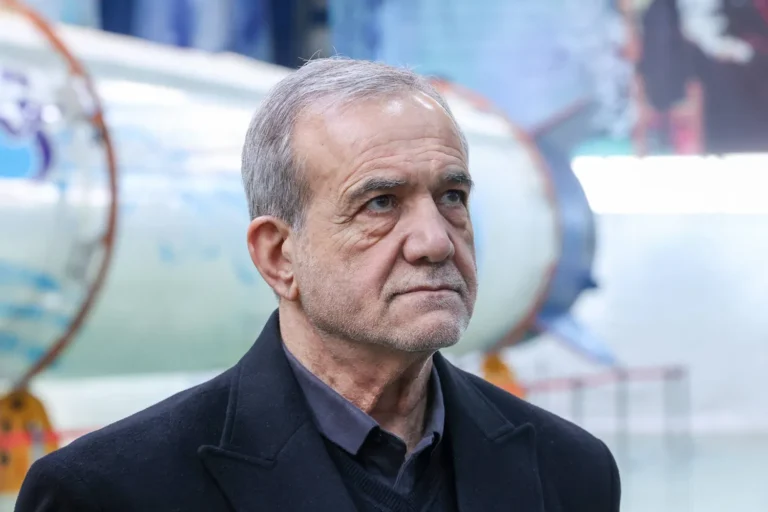
Tehran, Iran – Iranian President Masoud Pezeshkian asserted on Tuesday that the recent agreement with the United States was not a unilateral decision, but rather one reached “in full coordination” with Supreme Leader Mojtaba Khamenei. This move aims to lend supreme political legitimacy to the sensitive negotiations with Washington and to preempt any doubts about his government’s diplomatic approach.
Legal cover for negotiations
Pezeshkian’s remarks came during an official meeting, where he clearly emphasized his country’s unwavering stance in the negotiations. He affirmed that “Tehran will not back down on its rights, interests, or national principles under any circumstances.”
The Iranian president appeared resolute in his message, which also included internal criticism. He expressed regret over attempts by “internal factions” to tarnish the image of the negotiating team. He also called for unity at this critical juncture.
Technical meetings in Doha
These political positions coincide with accelerated field movements regarding the implementation of the understandings. A source familiar with the talks between Tehran and Washington reported yesterday, Monday, that technical teams from the two countries will hold an emergency meeting in the Qatari capital, Doha, on Tuesday. The meeting aims to establish precise mechanisms to implement the recently concluded memorandum of understanding.
Communication channels to de-escalate tensions
According to Reuters, citing the same source, these technical teams are tasked solely with monitoring the implementation details and identifying any logistical or political obstacles that may arise. The source also indicated that international mediators have established “private and direct” communication channels between the two sides. This aims to contain any potential military incidents in the region. The move also aims to ensure that the ceasefire on the ground remains within its agreed parameters. This reflects the desire of both parties to de-escalate the situation.
Challenges of balancing diplomacy and domestic affairs
This flurry of activity in Doha serves as a true test of the two sides’ seriousness in moving from the stage of general understandings to the stage of “procedural implementation,” amidst widespread regional and international anticipation. Observers believe that Pezeshkian’s emphasis on the Supreme Leader’s support for the negotiating process is a message of reassurance to the American side. It confirms that the Iranian negotiating team has sufficient authority to make its decisions. This also alleviates Washington’s concerns about a potential reversal of future commitments.
However, the internal situation in Iran remains a significant factor. Pezeshkian’s government faces pressure from conservative factions who fear that these negotiations will lead to strategic concessions. The Iranian president’s greatest challenge will be balancing the need for diplomatic engagement to end the country’s economic isolation with maintaining the delicate internal political balance, which requires him to adhere to the “national principles” rhetoric he has emphasized in his recent statements.