Sign In
Monday, Jun 29, 2026
  • العربية
Top Header VOE Logo Header Dark Mode VOE Logo
  • Latest
  • Emirates
  • News
    • Gulf Countries
    • Arab Countries
    • World
  • Politics
    • Analysis
    • Interviews
    • Reports and investigations
  • Business
    • Companies
    • Real Estate
    • Stock Market
    • Green Energy
    • Oil And Gas
    • Bitcoin
    • Business Reports
  • Science and Tech
    • AI
    • Electric Vehicles
    • Space and Mars
  • Sport
    • World Cup 2026
  • Society
  • Health
  • Lifestyle
  • Travel and Hotels
Reading: The “Shadow War” in the Middle East: Why do regional powers still cling to “proxies”?
Share
Latest
Ugarte suffers cruciate ligament tear.. and will be out of action for a long time
Putin: Russia is adapting its strategic plans to keep pace with international changes
Putin: Russia has the will and the ability to withstand Western pressure and consolidate its national security
A Qatari citizen was killed by shrapnel from military operations in the region
Israeli drone targets open land in southern Lebanon
Font ResizerAa
Voice Of EmiratesVoice Of Emirates
  • العربية
  • Latest News
Search
  • News
    • Emirates
    • Gulf Countries
    • Arab Countries
    • World
  • Politics
    • Analysis
    • Interviews
    • Reports and investigations
  • Business
    • Companies
    • Real Estate
    • Stock Market
    • Green Energy
    • Oil And Gas
    • Bitcoin
    • Business Reports
  • Science and Tech
    • AI
    • Electric Vehicles
    • Space and Mars
  • Lifestyle
  • Society
  • Sport
    • World Cup 2026
  • Health
  • Travel and Hotels
Have an existing account? Sign In
Follow US
All rights reserved © Voice of Emirates - News service from Our Media Group
AnalysisPolitics

The “Shadow War” in the Middle East: Why do regional powers still cling to “proxies”?

Guardian report: "Proxy" strategies fail in Iran, Syria and Gaza

علي رجب
Last updated: 28/06/2026 11:25 pm
Ali Ragab
علي رجب
ByAli Ragab
News Editor
Ali Ragab, editor at Voice of Emirates News Agency, Cairo office, is an Egyptian journalist and poet, a member of the Egyptian Journalists Syndicate, specializing in...
- News Editor
4 hours ago
Share
4 Min Read
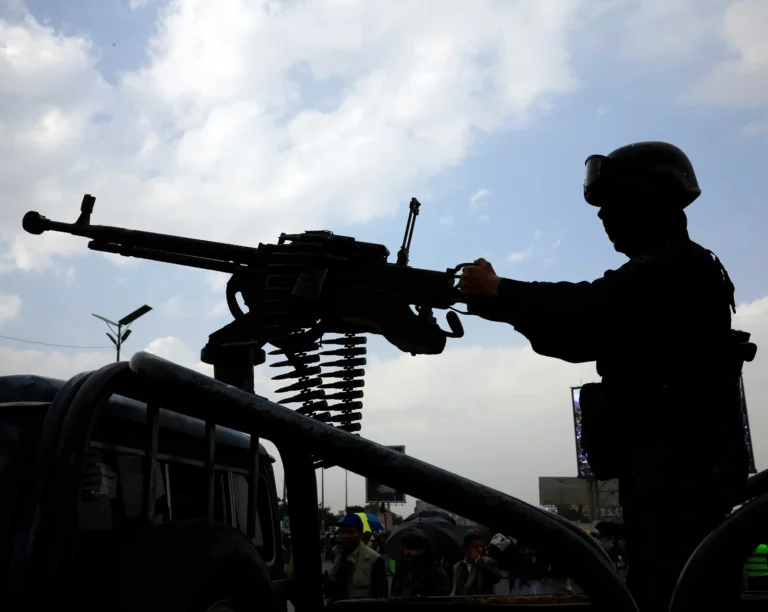
Shadow war in the Middle East: Why are regional powers still clinging to proxies?
Shadow war in the Middle East: Why are regional powers still clinging to proxies? (Photo/NEWSWIRES)
SHARE
Highlights
  • Tehran and the reliance on proxies
  • Failure of alternative strategies
  • Strategic risks

London, Voice of the Emirates – In an in-depth analytical report entitled “The Shadow War,” the British newspaper “The Guardian” shed light on the phenomenon of increasing reliance on “agents” in the Middle East.

The newspaper stressed that this strategy still represents a strong temptation for Iran, Israel, and the United States.

This is despite regional trends aimed at disarming militias and strengthening state sovereignty.

Tehran and the reliance on proxies

The Guardian report indicates that Iran’s attempts to expand its influence remain a focus of Washington’s attention.

US Secretary of State Marco Rubio recently emphasized that any agreement

with Tehran must include a cessation of support for Hamas, Hezbollah, Iraqi factions, and the Houthis.

However, Western analysts believe that despite the recent difficulties faced by Hezbollah,

Tehran remains strategically committed to rebuilding its network of proxies.

They consider the current setbacks a temporary phase.

In this context, Hanin Ghaddar, a researcher at the Washington Institute,

explained that the Revolutionary Guard sees a critical need to regain control over the decisions of its proxies.

In contrast, other groups, such as the Houthis in Yemen, are showing

a greater tendency toward autonomy in decision-making, despite their close alliance with Tehran.

In Iraq, armed factions are adopting a more cautious approach to direct escalation with Washington.

This is due to their vulnerability to retaliatory strikes and the complexities of internal Iraqi politics.

Failure of alternative strategies

On the other hand, the United States and Israel were not immune to this approach.

The Guardian revealed the failure of efforts to employ armed groups

among ethnic minorities within Iran to destabilize the regime.

The report also touched upon a US plan that had been shelved for 20 years.

The plan aimed to use Kurdish fighters to infiltrate northwestern Iran.

This plan faced field and political obstacles, most notably the rejection by Turkish President Recep Tayyip Erdoğan.

Furthermore, there was a sense of Kurdish disillusionment following the events in Syria.

In Syria, Israel did not limit its support to the Kurds. Its intelligence activities extended

to supporting Druze militias to resist the consolidation of the Syrian government’s power.

As for Gaza, Israel’s attempts to build Palestinian militias as an alternative to Hamas have yielded modest results.

Intelligence expert Michael Milstein confirmed that these groups lack

popular support and cannot alter the strategic situation on the ground.

Strategic risks

The Guardian report arrives at a difficult paradox: while regional calls for the disarmament of militias are growing to address

the increasing instability in Syria, Libya, Sudan, and elsewhere, the “temptation” to use proxies remains.

This method remains relatively inexpensive for managing conflicts.

However, the report concludes with a warning from Milstein: “You can’t rely on proxies.

They are not only useless, they are harmful,” emphasizing that this strategy has often proven to be a double-edged sword.

The use of proxies only complicates crises rather than resolving them.

TAGGED:AgentsHamasHezbollahHouthisIraqi factionsMiddle Eastregional powersShadow WarVoice Of EmiratesVoice Of Emirates Website News
SOURCES:Voice of Emirates
Share This Article
Facebook Whatsapp Whatsapp LinkedIn Telegram Threads Email Copy Link Print
Previous Article Britain condemns the attacks on Bahrain, Kuwait, and the Strait of Hormuz and calls for the implementation of the US-Iranian agreement Britain condemns attacks on Bahrain, Kuwait, and the Strait of Hormuz and calls for implementation of the US-Iran agreement
Next Article The suspension of US-Iranian talks in Switzerland postpones a new round of negotiations The suspension of US-Iranian talks in Switzerland postpones a new round of negotiations

Editor's Pick

Manuel Ugarte

Ugarte suffers cruciate ligament tear.. and will be out of action for a long time

Montevideo, Uruguay - The Uruguayan Football Association has settled the controversy surrounding Manuel Ugarte's injury, which he suffered during the…

By
Ahmed Khairy
2 Min Read
Putin: Russia is adapting its strategic plans to keep pace with international changes

What are the implications of Moscow announcing modifications to some of its…

1 Min Read
Russian President Vladimir Putin
Putin: Russia has the will and the ability to withstand Western pressure and consolidate its national security

How did the Russian President respond to Western pressure and the security…

2 Min Read

Trending

A Qatari citizen was killed by shrapnel resulting from military operations in the region

A Qatari citizen was killed by shrapnel from military operations in the region

How did Qatar announce the details of the first civilian…

3 hours ago

Israeli drone targets open land in southern Lebanon

What did the reports reveal about…

3 hours ago

The suspension of US-Iranian talks in Switzerland postpones a new round of negotiations

What are the implications of postponing…

3 hours ago

Britain condemns attacks on Bahrain, Kuwait, and the Strait of Hormuz and calls for implementation of the US-Iran agreement

How did London comment on the…

4 hours ago

The UAE participates in the Global Leaders Forum to enhance international cooperation with Panama

How did the UAE's participation in…

4 hours ago

You may also be interested in

US Ambassador to the UN: Iran will not be able to threaten international navigation without a response
NewsWorld

US Ambassador to the UN: Iran will not be able to threaten international navigation with impunity

US Ambassador to the UN: Iran will not be able to threaten international navigation with impunity

2 Min Read
Iran: Mojtaba Khamenei calls for opening thousands of legal cases against Washington and Israeli leaders
PoliticsReports and investigations

Iran: Mojtaba Khamenei calls for opening thousands of legal cases against Washington and Israeli leaders

Iran: Mojtaba Khamenei calls for opening thousands of legal cases against Washington and Israeli leaders

4 Min Read
Dubai Customs Launches Smart Vehicles to Boost K9 Unit Readiness in Anti-Drug Efforts
Emirates

Dubai Customs Launches Smart Vehicles to Boost K9 Unit Readiness in Anti-Drug Efforts

Dubai, United Arab Emirates – Dubai Customs has launched a new fleet of vehicles for its customs dog unit, "K9".…

5 Min Read
Three highly anticipated Arab matchups in the Round of 32 of the 2026 World Cup.
World Cup 2026

Three highly anticipated Arab matchups in the Round of 32 of the 2026 World Cup.

Arab fans are turning their attention to the Round of 32 matches of the 2026 World Cup, where three Arab…

2 Min Read
Top Header VOE Logo Header Dark Mode VOE Logo
  • About Us
  • Contact us
  • Advertise on Voice Of Emirates
  • Privacy Policy
Reading: The “Shadow War” in the Middle East: Why do regional powers still cling to “proxies”?
Share
  • Publishing Principles
  • Ethics Policy
  • Corrections Policy
  • Diversity Policy
  • Actionable Feedback Policy
  • Ownership & Funding
  • Privacy Policy
Reading: The “Shadow War” in the Middle East: Why do regional powers still cling to “proxies”?
Share

All rights reserved © Voice Of Emirates – a news service from Our Media Group

Welcome Back!

Sign in to your account

Username or Email Address
Password

Lost your password?