Tehran, Iran – The Iranian Foreign Ministry confirmed on Tuesday that the recent quadrilateral negotiations held in Switzerland did not include detailed discussions on the nuclear issue or sanctions. However, the ministry emphasized that these issues would be the focus of extensive discussions during the 60-day period following the signing of the memorandum of understanding.
Iranian Foreign Ministry: No nuclear negotiations in Switzerland
Iranian Foreign Ministry spokesman Esmail Baghaei explained at a press conference that the memorandum of understanding reached is based on the principle of mutual respect and adherence to reality. He also warned that “any condescending rhetoric will undermine the agreement.”
Baghaei revealed the formation of a specialized working group to implement the memorandum’s provisions. Furthermore, he emphasized that halting attacks on Lebanon is a fundamental and integral pillar of the US commitments under this agreement.
He also announced a five-way coordination mechanism comprising Iran, Qatar, Pakistan, the United States, and Lebanon. This mechanism aims to prevent escalation and closely monitor the ceasefire in Lebanon.
Ambassador Irwani: Progress made in technical talks
For his part, Iran’s ambassador to the United Nations, Amir Saeed Irvani, revealed that “good progress” had been made during technical talks between Tehran and Washington in Switzerland. Irvani explained in media statements that the main talks concerning the Strait of Hormuz would be held bilaterally between Iran and Oman. These would be followed by parallel consultations with the signatories of the memorandum of understanding. Irvani emphasized that the Lebanese issue was a prominent topic in the negotiations and reiterated Iran’s rejection of any new attacks against Lebanon.
Managing the Strait of Hormuz: A New Phase
In a related development, Tehran reaffirmed its intention to assume control of the Strait of Hormuz, as the first round of negotiations aimed at ending the state of war in the Middle East concluded.
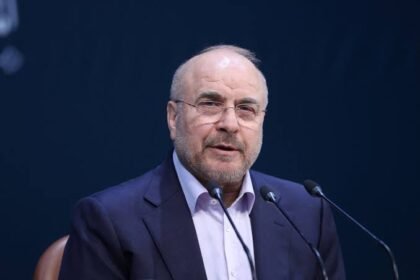
In notable remarks, Iran’s chief negotiator, Mohammad Bagher Ghalibaf, asserted that the situation in the Strait of Hormuz “will not return to what it was before the war.” However, he emphasized that the waterway would be under Tehran’s complete control, in accordance with international law.
This development underscores a fundamental shift in the status of the Strait of Hormuz, through which approximately 20% of the world’s energy supply passes. Prior to the recent clashes on February 28, the strait was not under the control of any single entity. However, Iran is now seeking to establish a new reality that grants it administrative authority over the waterway.
All eyes remain on the understandings that will emerge over the next two months. The continuation of calm hinges on the success of the dialogue channels and technical negotiations being led by Muscat and Tehran. These efforts aim to solidify a new regional stability following a period of intense military tensions.